
Classical Elegance – The Golden Age of Telugu Literature and Poetry
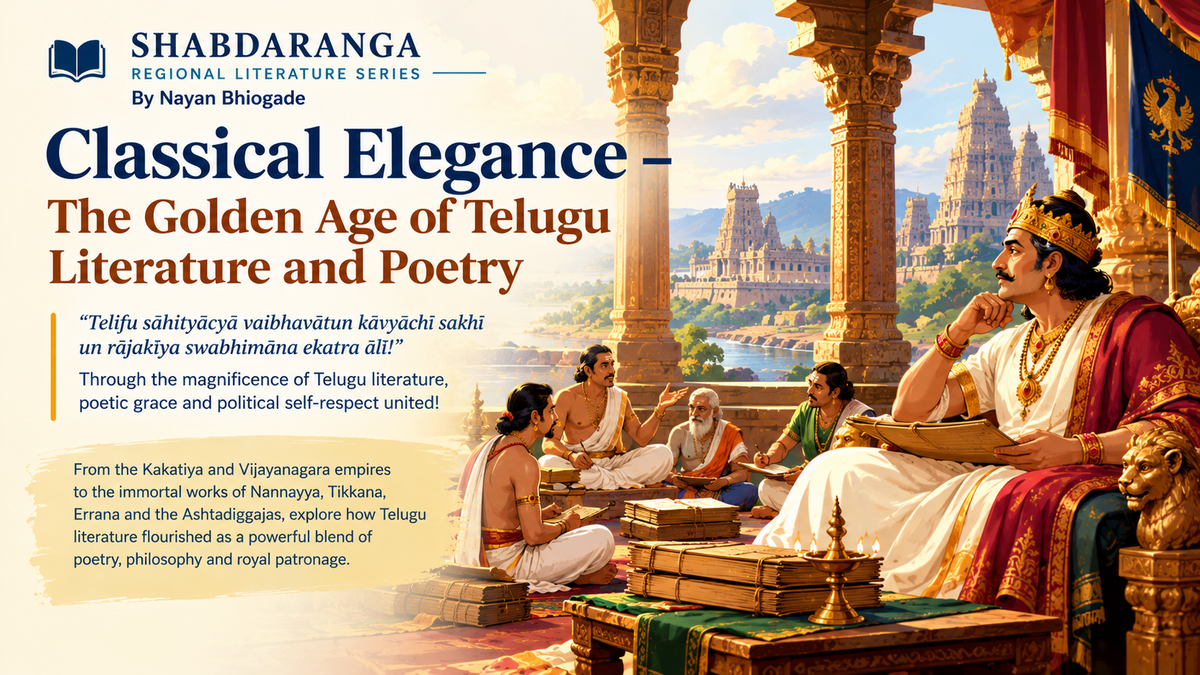
"Telifu sāhityācyā vaibhavātun kāvyāchī sakhī un rājakīya swabhimāna ekatra ālī!"— "Through the magnificence of Telugu literature, poetic grace and political self-respect united!"
Telugu literature boasts a rich, ornate, and deeply sophisticated tradition that reached its zenith during the Kakatiya and Vijayanagara imperial eras. Often referred to as the "Italian of the East" due to its melodious vocal endings, Telugu evolved into a powerhouse of classical epic poetry (Kavya), drama, and philosophy.
A monumental milestone was achieved by the poet trio (Kavitrayam)—Nannayya, Tikkana, and Errana—who translated and localized the Mahabharata into Telugu, establishing a distinct literary standard. Later, during the golden reign of Emperor Sri Krishnadevaraya (himself a celebrated poet of the Amuktamalyada), Telugu literature witnessed the Prabandha era. Eight legendary court poets known as the Ashtadiggajas, led by Allasani Peddana, elevated descriptive poetry, emotional depth, and philosophical inquiry to unmatched heights.
Telugu literature bridges classical Sanskrit aesthetics with vibrant regional idioms. The Nalanda Literature Festival (NLF) platforms classical Telugu literary heritage, connecting its profound historical roots to contemporary national literary conversations.
To Be Continued (क्रमशः): How did the rhythmic and metaphysical depth of Kannada literature shape philosophical movements in peninsular India? Find out in Part 33: The Vachana Revolution – Social Reform and Kannada Literature.