
Coastal Epics – The Literary and Cultural Tapestry of Malayalam
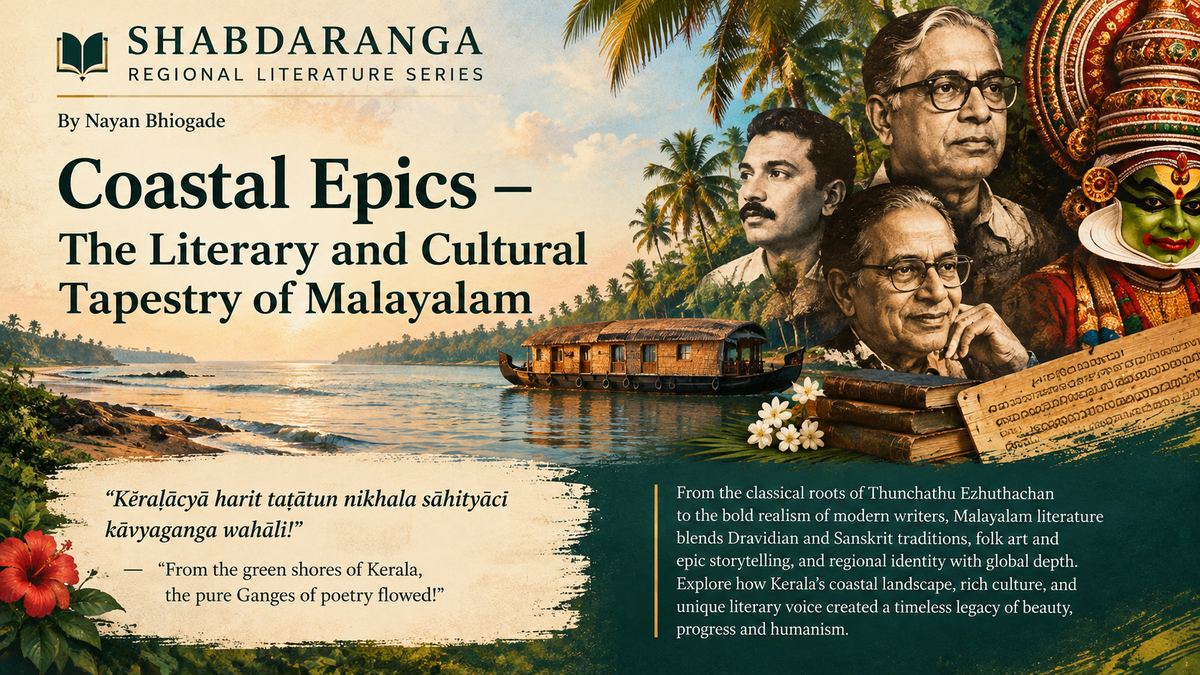
"Kēraḷācyā harit taṭātun nikhala sāhityācī kāvyaganga wahālī!"— "From the green shores of Kerala, the pure Ganges of poetry flowed!"
Malayalam, the youngest of the major Dravidian literary languages, developed an exceptionally rich literary culture by harmoniously blending Dravidian roots with Sanskrit grammar (Manipravalam style) and indigenous folk traditions. Situated along the spice-rich Malabar coast, Kerala’s literature reflects deep aesthetic refinement and social progressivism.
The classical foundation was laid by Thunchathu Ezhuthachan (hailed as the father of Malayalam language), whose devotional epics like Adhyatma Ramayanam standardized Malayalam prose and poetry. In later centuries, the Champu literature and traditional performance arts like Kathakali literature combined drama, music, and epic narrative into a singular sensory experience.
In the modern era, Malayalam literature pioneered radical realism, progressive social movements, and psychological fiction through literary giants like Thakazhi Sivasankara Pillai (Chemmeen), Vaikom Muhammad Basheer (hailed as the 'Beypore Sultan' for his humorous, empathetic stories of the marginalized), and Jnanpith laureates like M. T. Vasudevan Nair and O. V. Vijayan.
Malayalam literature represents a high benchmark of global literary aesthetics within a regional idiom. The Nalanda Literature Festival (NLF) celebrates Kerala's literary brilliance, connecting regional coastal stories to international literary discourse.
To Be Continued (क्रमशः): How did modern South Indian novelists and short-story writers capture the complexities of post-independence society? Find out in Part 35: Modern Voices – Contemporary Fiction across Southern Languages.