
The Ancient Echoes of Sangam Literature – Tamil Roots of Indian Poetry
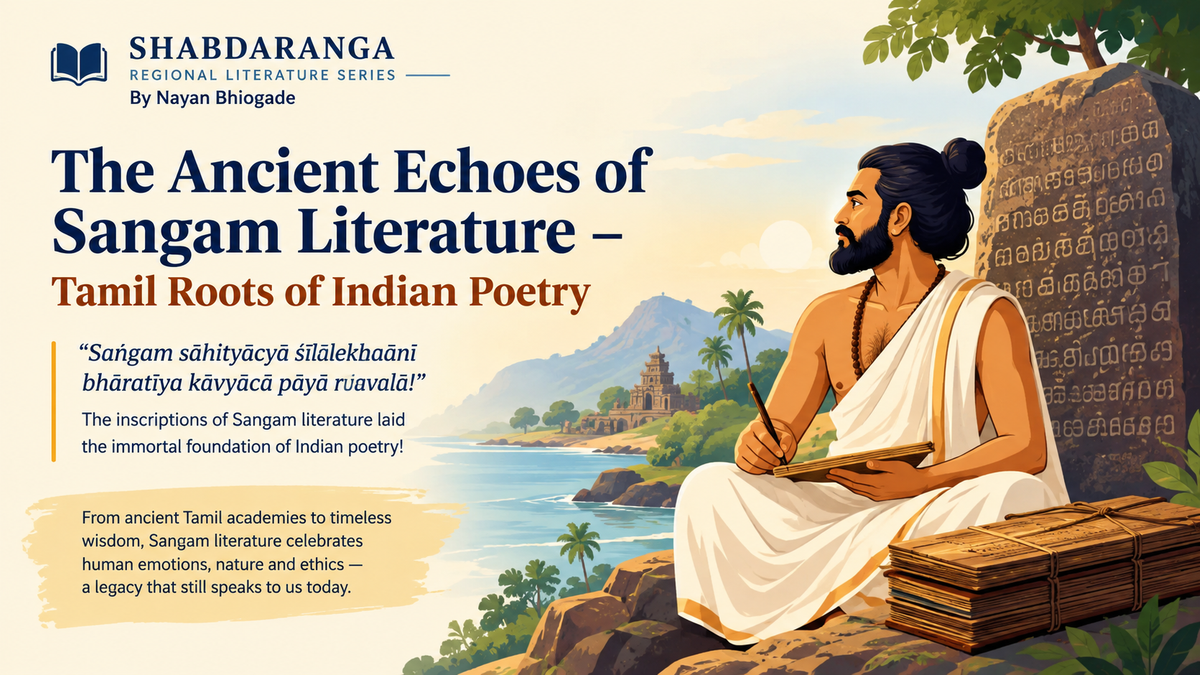
"Saṅgam sāhityācyā śīlālekhaānī bhāratīya kāvyācā pāyā rūjavalā!"— "The inscriptions of Sangam literature laid the immortal foundation of Indian poetry!"
Moving southward in our literary journey, we encounter one of the oldest and most vibrant classical traditions in the world—the Tamil Sangam Literature (dating back over two millennia). Composed across ancient academies (Sangams), this classical corpus categorized poetry into Aram (righteousness/ethics), Porul (wealth/society), and Inbam (love/aesthetics).
Sangam poetry is celebrated for its remarkable secular nature, acute realism, and deep association with nature (divided into Thinai landscapes like mountains, forests, fields, and coasts). Master poets like Kappiyar, Avvaiyar, and Thiruvalluvar captured human emotions and civic ethics with striking modernity. Thiruvalluvar’s monumental work, the Thirukkural, transcended regional and linguistic boundaries, offering timeless ethical wisdom that resonates universally across all Indian languages.
The classical depth of Sangam poetry proves that ancient southern texts form an essential pillar of Indian literary consciousness. The Nalanda Literature Festival (NLF) honors this ancient Tamil literary heritage, acting as a national cultural bridge that connects southern roots to the broader pan-Indian and global discourse.
To Be Continued (क्रमशः): How did the Bhakti movement transcend linguistic barriers between Tamil Nadu and the rest of India through divine poetry? Find out in Part 31: Alvars and Nayanars – The Bhakti Awakening of the South.