
The Vachana Revolution – Social Reform and Kannada Literature
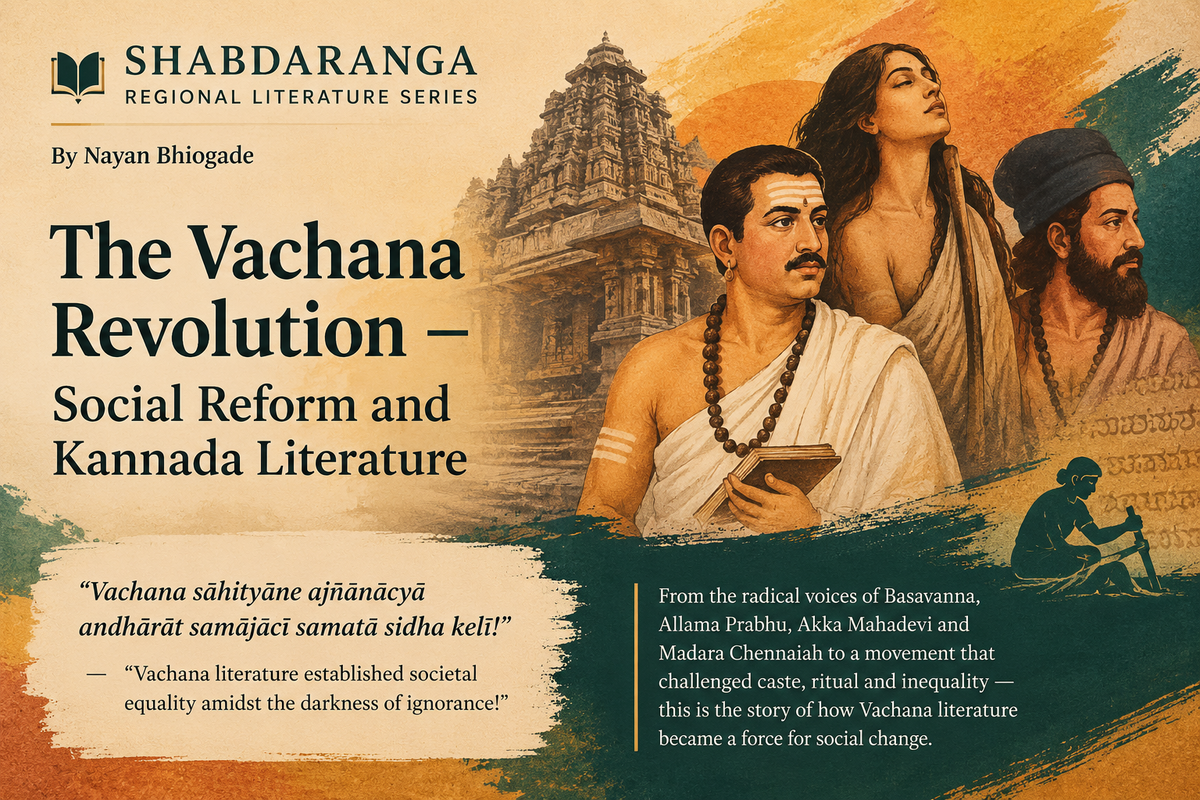
"Vachana sāhityāne ajñānācyā andhārāt samājācī samatā sidha kelī!"— "Vachana literature established societal equality amidst the darkness of ignorance!"
While we previously explored the cultural borderlands between Maharashtra and Karnataka, Kannada literature possesses an independent classical and modern brilliance that deeply shaped South Indian intellectual history. From the early epics of Pampa, Ranna, and Ponna (the Ratnatraya of Jain literature) to the 12th-century socio-religious revolution, Kannada has been a language of profound thought.
The most radical literary expression in Kannada was the Vachana movement of the 12th century. Spearheaded by social reformers and mystic poets like Basavanna, Allama Prabhu, Akka Mahadevi, and Madara Chennaiah, Vachanas were short, piercing prose-poems written directly in spoken Kannada. They rejected ritualism, idol worship, and caste discrimination, fiercely championing manual labor (Kayaka) and gender equality.
The Vachana literature stands as an eternal testament to the power of vernacular prose in driving social reform. The Nalanda Literature Festival (NLF) honors this egalitarian literary tradition, serving as a national cultural bridge that links southern reformist ideals with the broader Indian intellectual landscape.
To Be Continued (क्रमशः): How did the emerald coast of Kerala cultivate a unique synthesis of Sanskrit classics, folk ballads, and modern Malayalam prose? Find out in Part 34: Coastal Epics – The Literary and Cultural Tapestry of Malayalam.