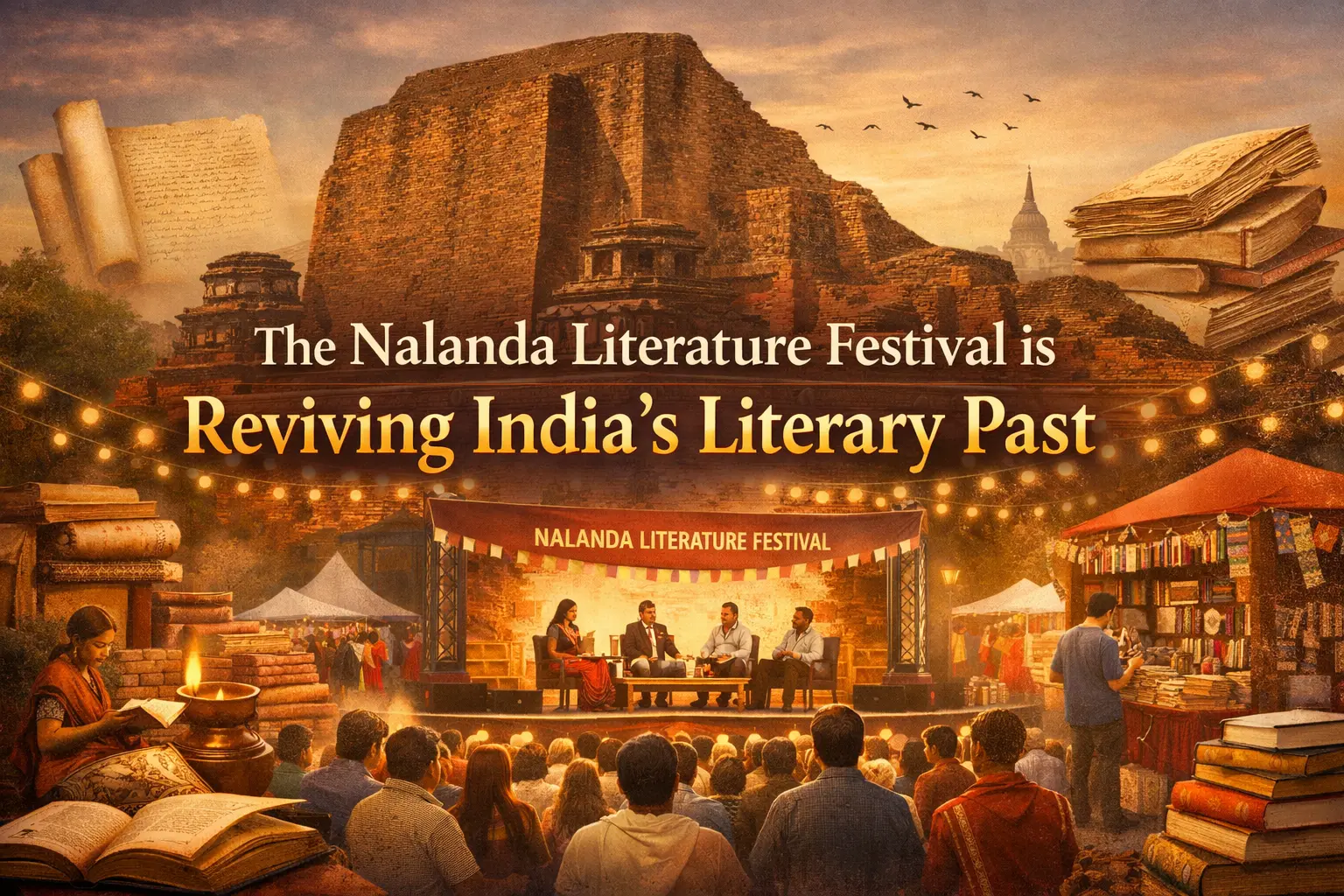
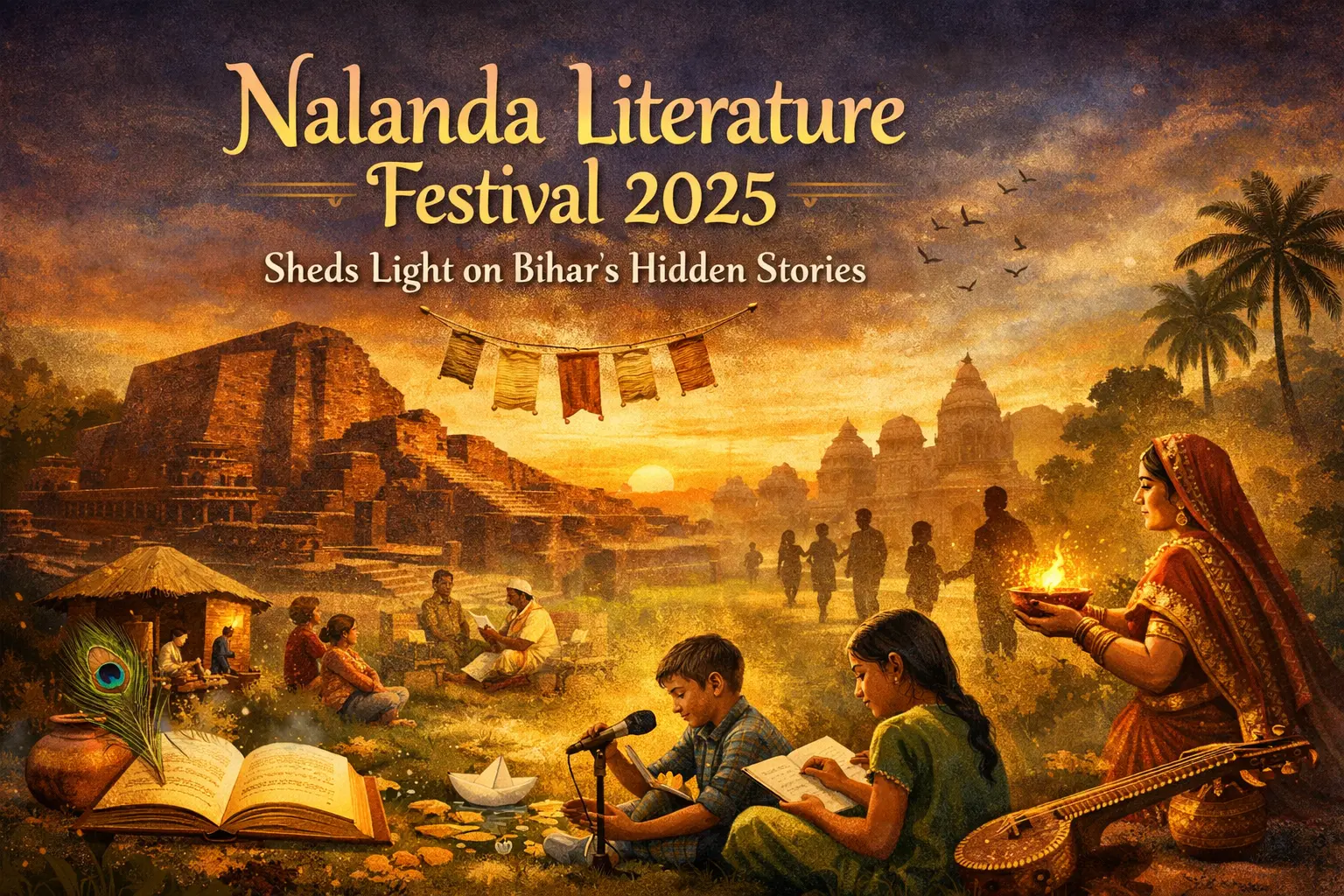
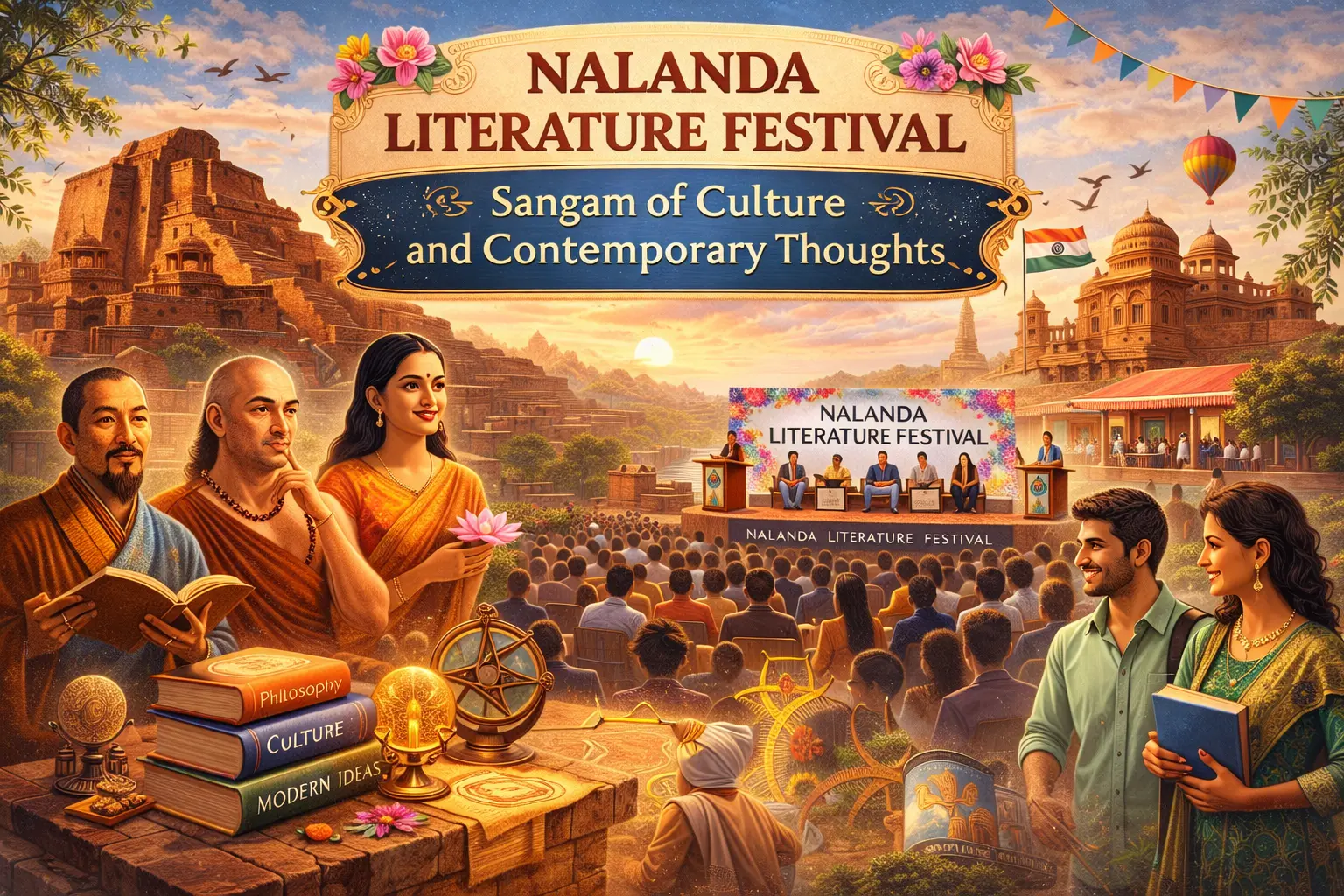
The Nalanda Literature Festival carries the spirit of India’s ancient intellectual legacy into the present, bringing together writers, scholars, and enthusiasts at the historic land of Nalanda.
Scheduled for 21–25 December 2025 at the Rajgir Convention Centre, the festival is a vibrant celebration of literature, culture, and ideas, blending ancient wisdom with contemporary voices. From mainstage conversations and poetry sessions to folk art, regional literature, and diaspora dialogues, it creates a rich, immersive cultural experience.
Rooted in Nalanda’s legacy as a global center of learning, the festival fosters dialogue across generations while integrating technology like AI and digital tools to preserve languages and oral traditions. More than just a literary gathering, it is a movement that connects heritage with innovation, ensuring that India’s storytelling traditions continue to evolve and thrive.
The Nalanda Literature Festival 2025, scheduled from December 21 to 25 at the Rajgir Convention Centre, Bihar, is a grand celebration of India’s literary and cultural heritage. Organised under the Nalanda Literature Development Programme (NLDP), it brings together over 50,000 participants, including writers, scholars, and young voices from across the world.
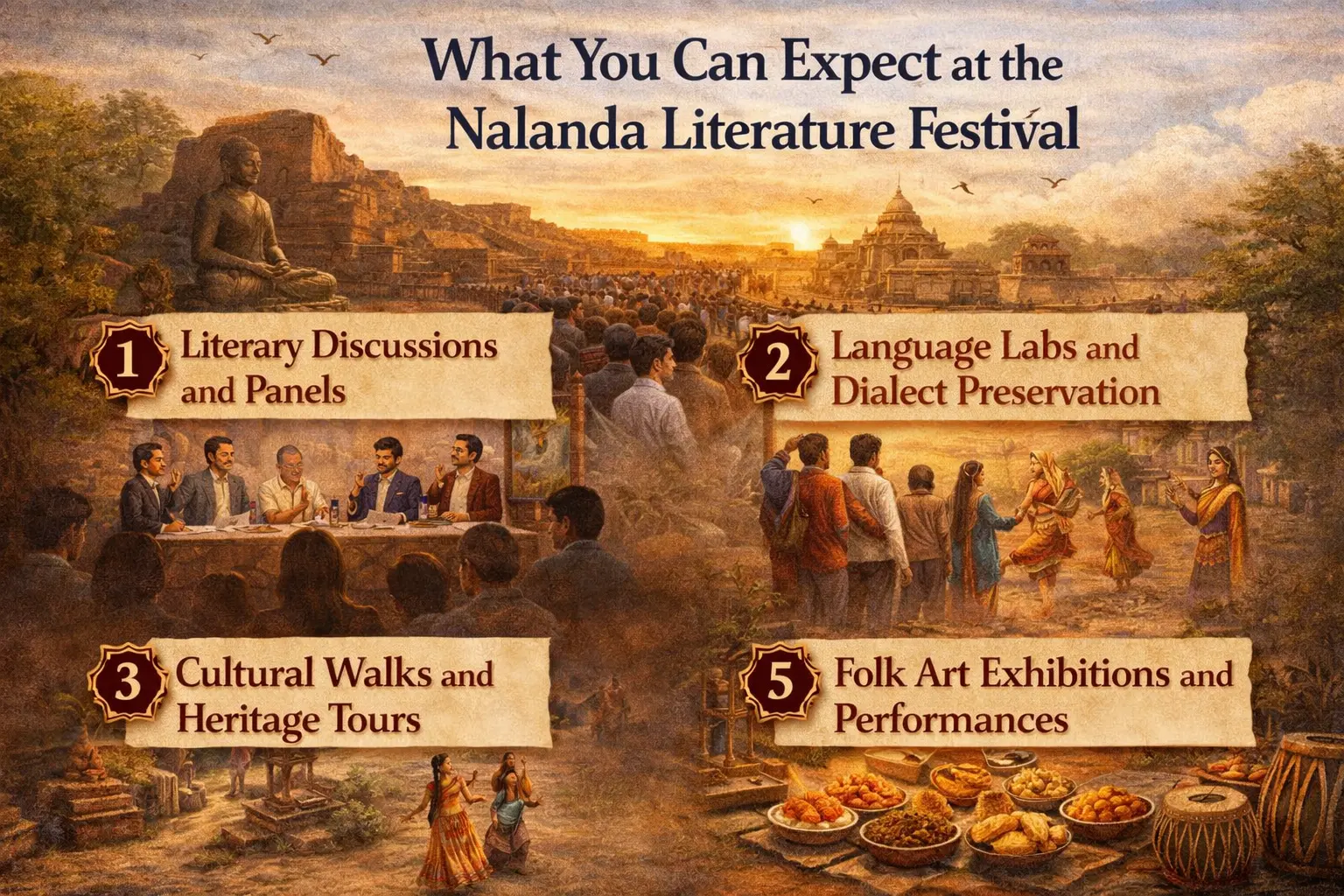
The festival features panel discussions, language labs, heritage tours, cultural performances, and cuisine experiences, while also highlighting diaspora connections, youth talent, and regional language preservation through technology. With a strong vision to revive Nalanda’s legacy as a global knowledge hub, NLF 2025 aims to create a lasting cultural impact and become a key event in India’s literary calendar.
The Nalanda Literature Festival 2025, taking place from 21st to 25th December at Rajgir Convention Centre, is set to be one of India’s most enriching cultural gatherings. Bringing together over 50,000 participants, it celebrates regional languages, literature, and heritage through panel discussions, workshops, and performances.
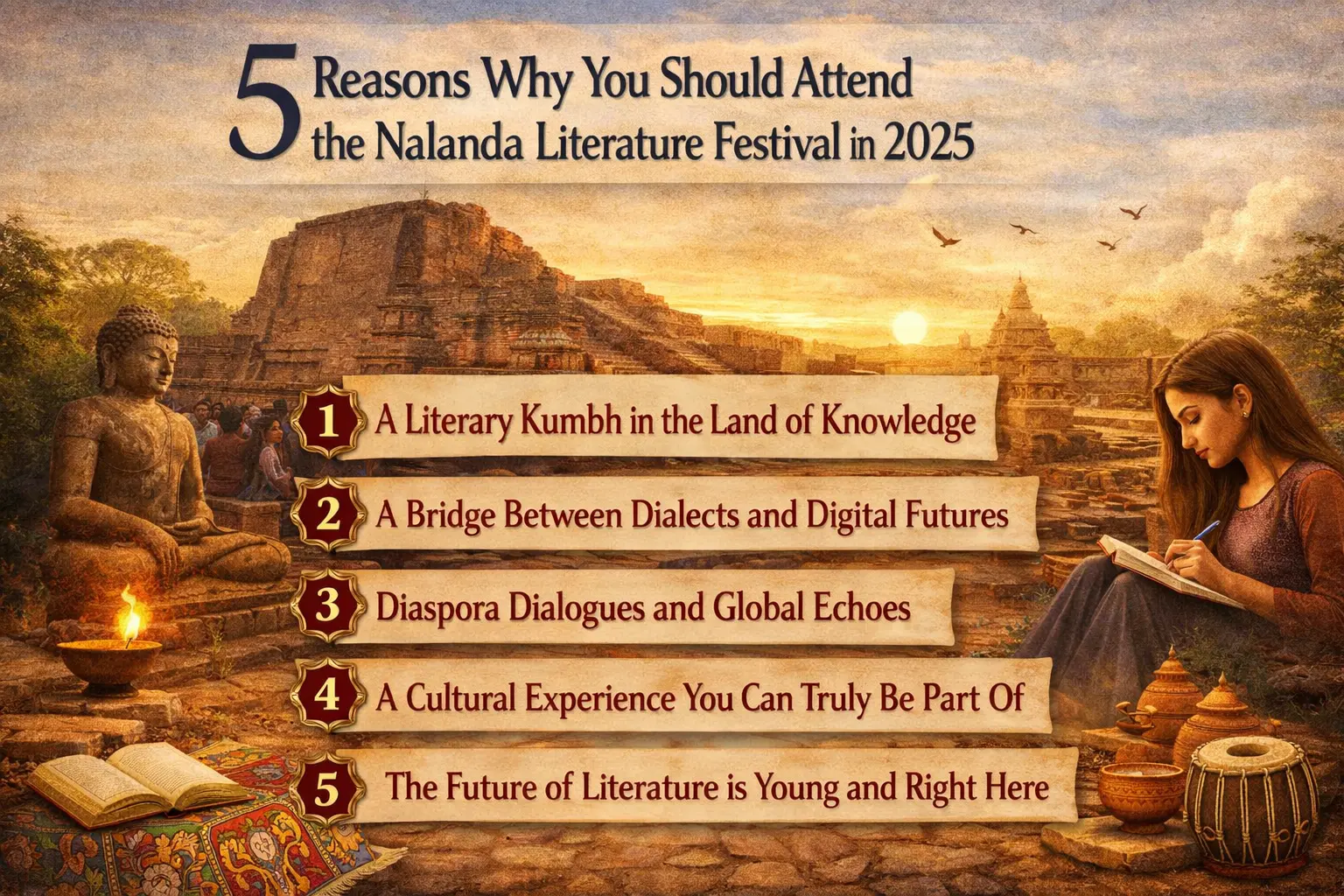
The festival highlights five key experiences: a vibrant literary congregation, preservation of dialects through technology, global diaspora conversations, immersive cultural showcases, and strong youth participation. More than just an event, it creates a space where tradition meets innovation, making it a meaningful platform for cultural exchange and creative expression.
The Nalanda Literature Festival 2025, held from 21st to 25th December in Bihar, highlights the region’s rich yet often overlooked cultural and linguistic heritage. Through the Nalanda Literature Development Programme (NLDP), it brings focus to local languages, oral traditions, regional writers, and youth voices. With workshops, cultural activities, and global participation, the festival connects Bihar’s past with present storytelling, aiming to preserve its legacy while building a vibrant, inclusive literary future.
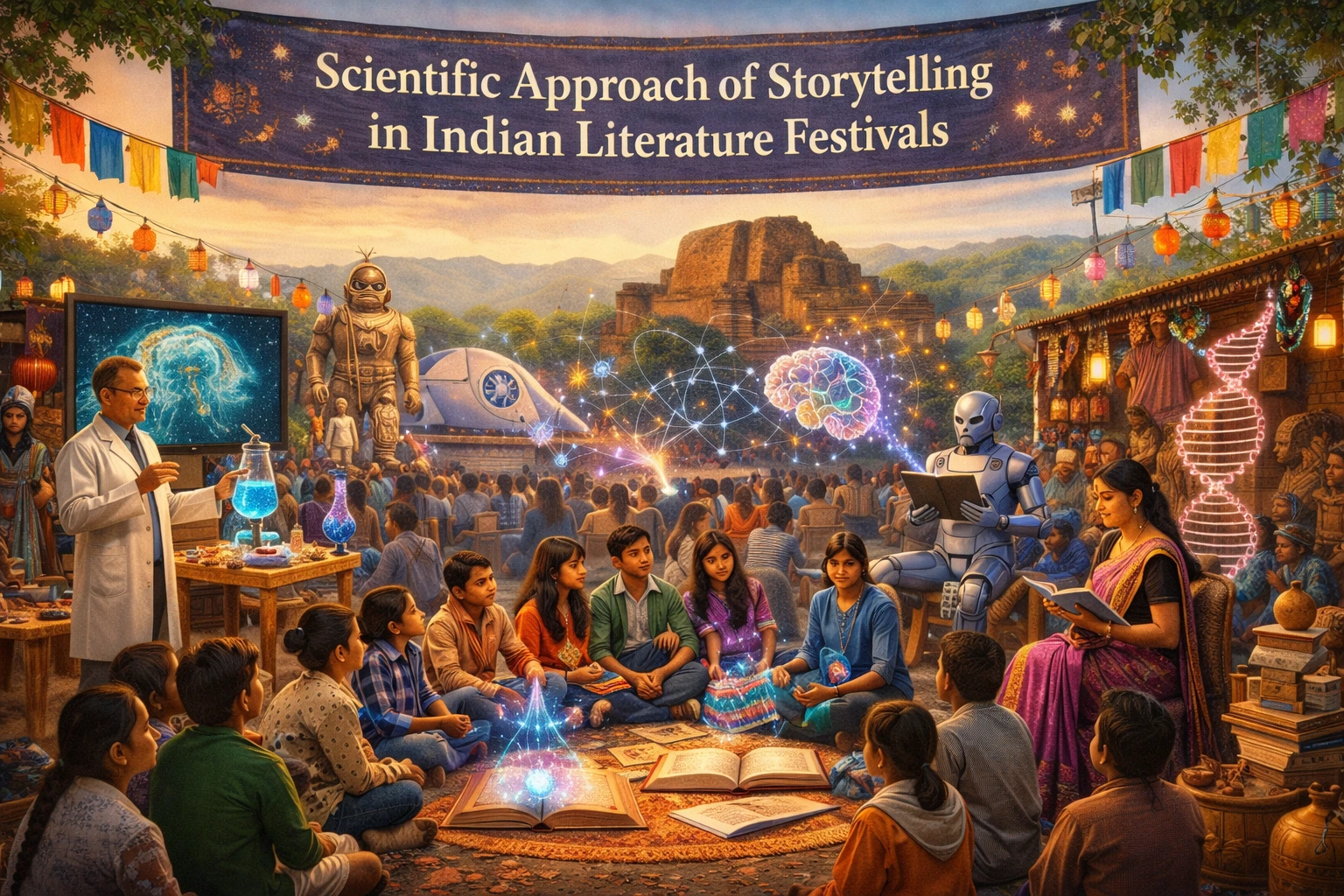
Storytelling has always been a vital part of Indian folk culture, preserving oral traditions and passing knowledge across generations. Beyond entertainment, it also has a strong scientific dimension. Research published in the Journal of Neuroscience highlights that storytelling enhances memory and brain function by organizing information in meaningful ways. Studies using Functional Magnetic Resonance Imaging (fMRI) show that stories help the brain process and retain knowledge more effectively, especially in learning environments. Traditional Indian narratives like Panchatantra, Baital Pachisi, and the epics Ramayana and Mahabharata not only sharpen memory but also instill moral values and social ethics, making storytelling an essential tool for both intellectual and cultural development.
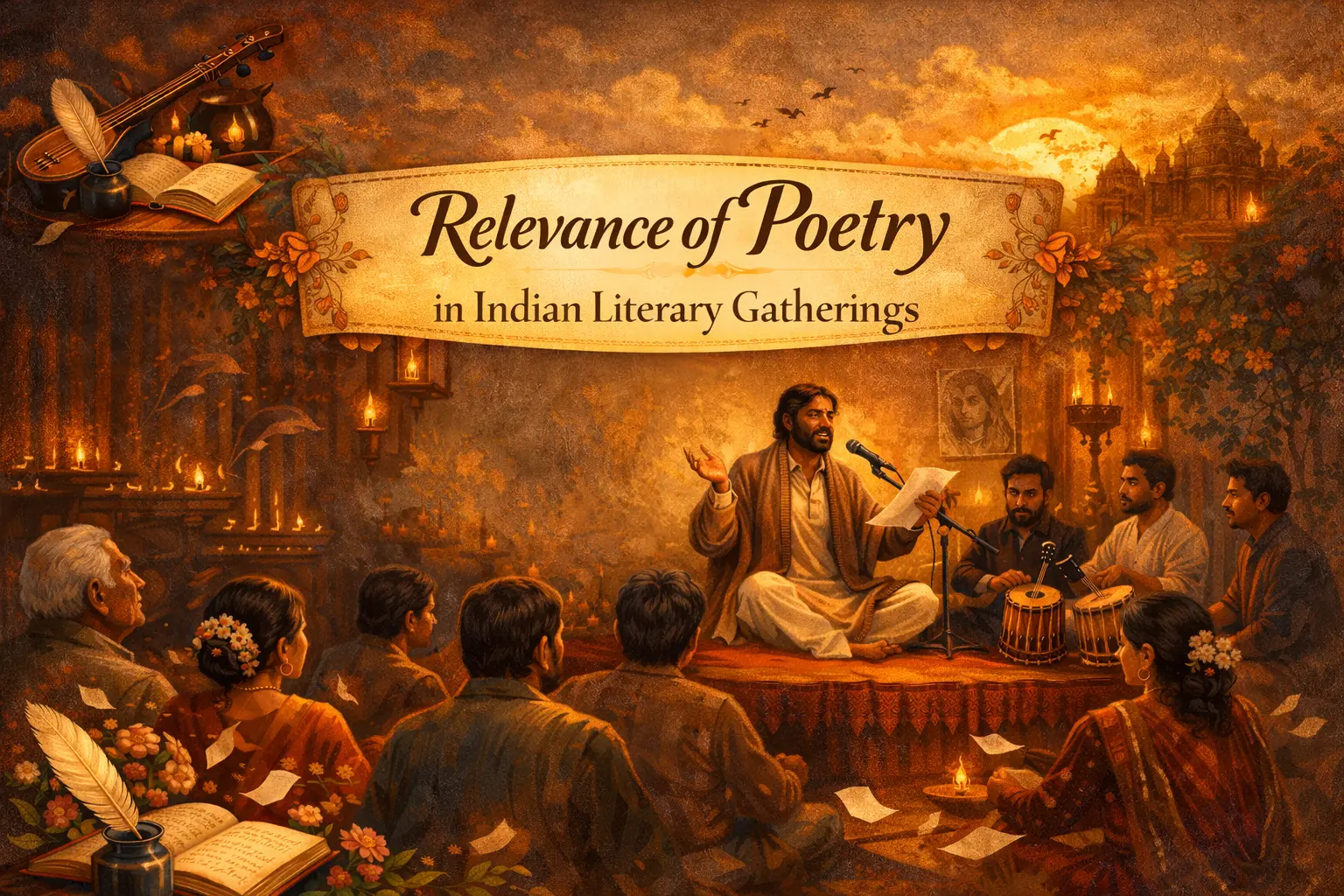
Poetry is more than art or emotional healing; it is a liberated state of the heart expressed through words. As Acharya Ram Chandra Shukla describes, poetry is the “रसदशा” — a state of inner freedom achieved through language. Yet, as Namvar Singh notes, this freedom is relative, rooted in social and political reality. Poetry thus balances emotion, truth, and consciousness in one profound expression.
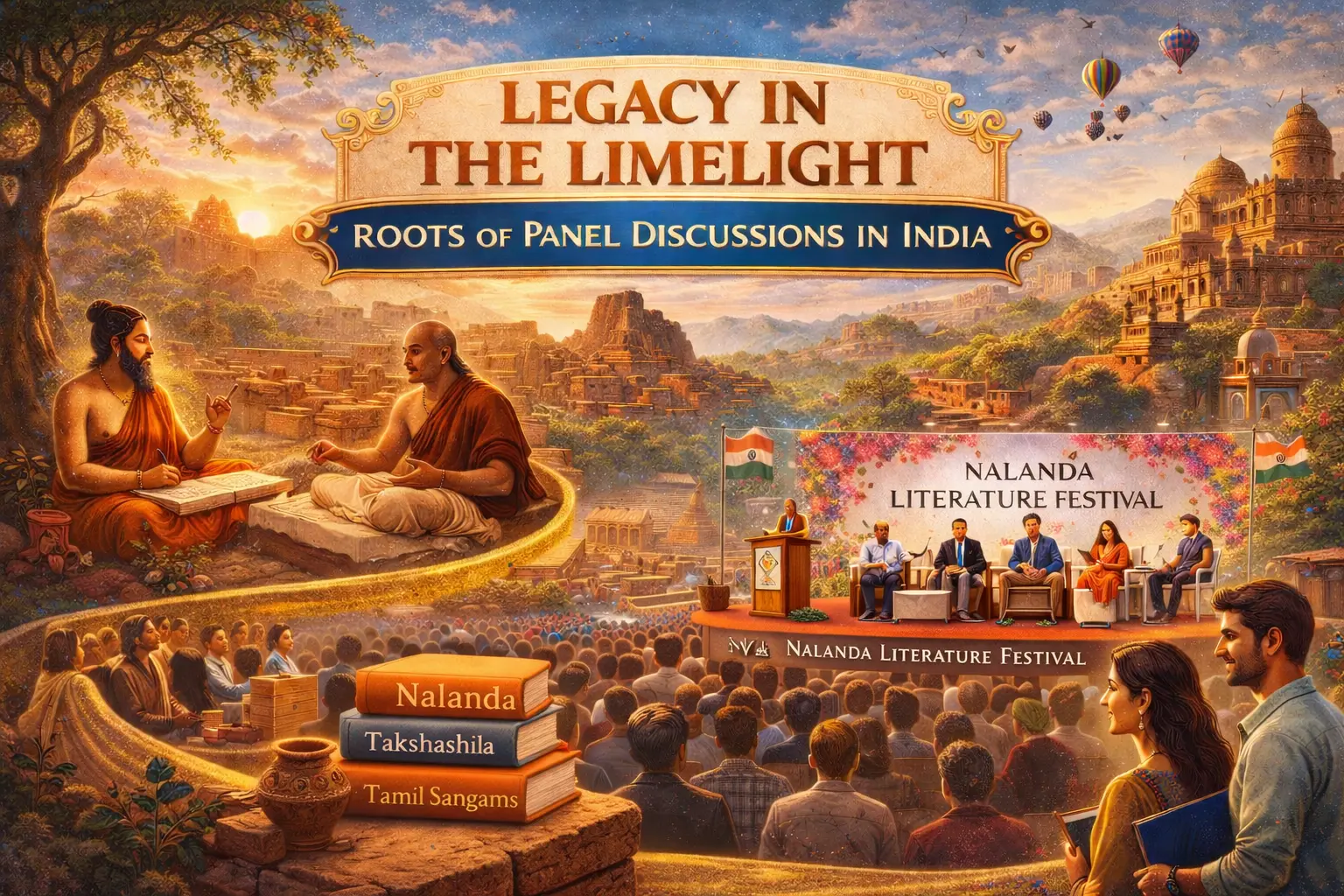
The piece connects India’s ancient tradition of scholarly debates—from Nalanda to classical shaastrartha—to modern literary festival panel discussions. Inspired by platforms like the Jaipur Literature Festival, it shows how public dialogue remains central to India’s enduring culture of knowledge-sharing.
The Nalanda Literature Festival bridges Nalanda’s ancient cultural legacy with contemporary ideas. It offers an inclusive platform where literature, philosophy, and modern thought converge—ensuring tradition remains dynamic, relevant, and alive.
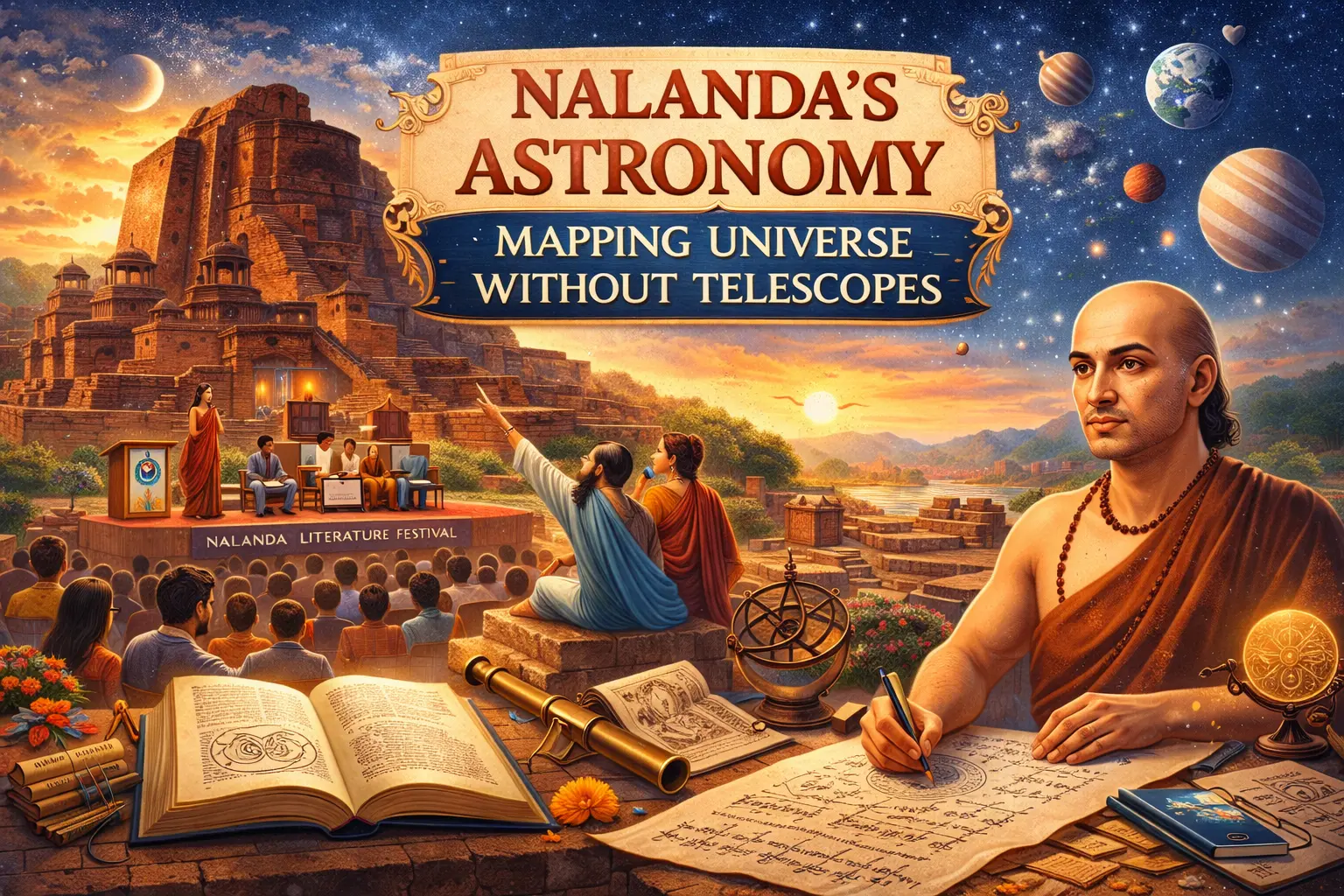
This piece highlights Nalanda’s ancient astronomical legacy, shaped by thinkers like Aryabhata, and shows how their spirit of logic and curiosity is revived at the Nalanda Literature Festival—where science, history, and storytelling come together to inspire today’s youth.