

Indian Literature Festivals Are Also The Storytelling Festivals Of India
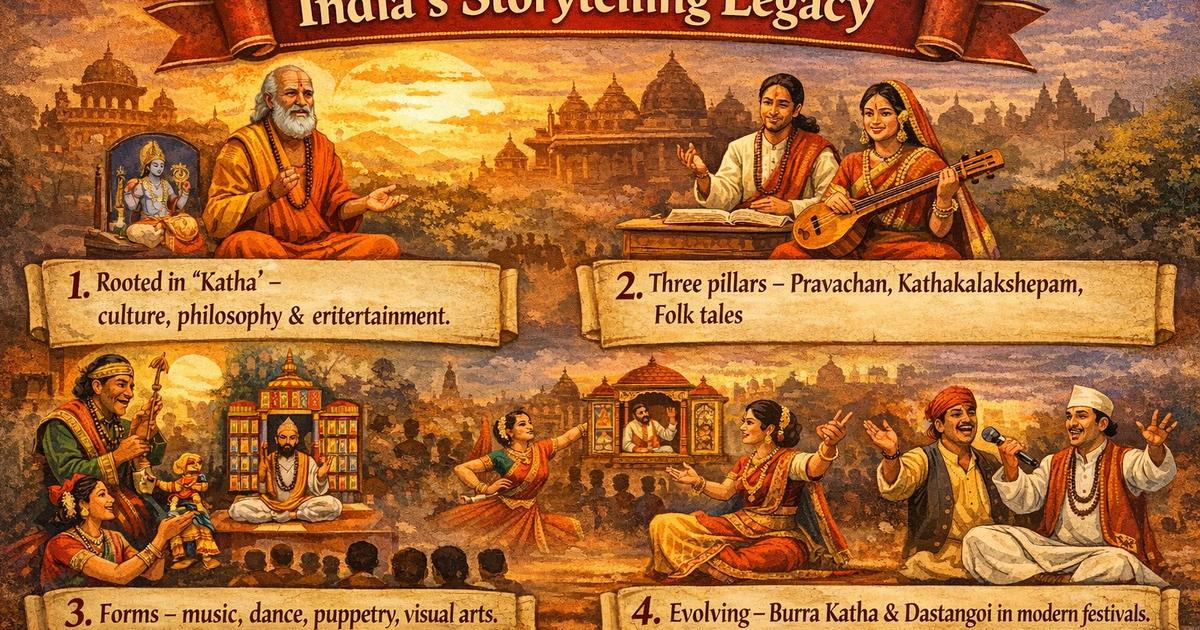
Storytelling is a long legacy of India, which is on a very common ground known as “katha”. No wonder why such art is being incorporated into the literature festivals of India, and recently they are also known as storytelling festivals of India quite synonymously. Storytelling as an art promotes Cultural Moralities associated with them along with hidden yet inevitable gestures of Philosophy and Entertainment. The “Katha Tradition” of India is based on three major pillars, i.e., ‘PRAVACHAN, KATHAKALAKSHEPA AND FOLK NARRATIVES'. In India, storytelling is depicted in various forms from songs to dances to puppetry to visual scrolling paintings.
The vibrant configurations of storytelling in India
Among all the storytelling forms Indians have been preserving so far, the most basic and evergreen one is “Pravachan”, which is supposed to be an art of orating mythological and religious texts contributing to spiritual and self-understandings. “Kathakalakshepam” is another form of storytelling from South INDIA which combines music, dance, and philosophical texts. The most significant art form is “Kavad Katha” from Rajasthan, which includes stories from the Puranas and local deities through a portable “Wooden Temple Structure”, which eventually unfolds itself into a whole tale. Another important and vibrant art form from eastern India is “Pata Chitra”, which prominently includes stories of Krishna from the Ramayana and the Mahabharata. These forms also, in a way, produce more defined and evolved ideas of storytelling.
Storytelling, apart from entertaining, also transformed itself into a space for satire. “The Burra Katha” from the Andra region is a perfect example of such an art form of Storytelling in India. Literature festivals, as storytelling festivals of India, also promotes “The Shruti Tradition” of India. Over the period, India has been invaded by so many communities and “Dastangoi” is such a form of storytelling, which originates from the culmination of Hindi and Persian,i.e Urdu. Through their nested structures and unique adaptations these forms of storytelling stand as a grand symbol of India’s rich symbol and legacy.