

The Journey of Dhamma: Beyond Borders and Time
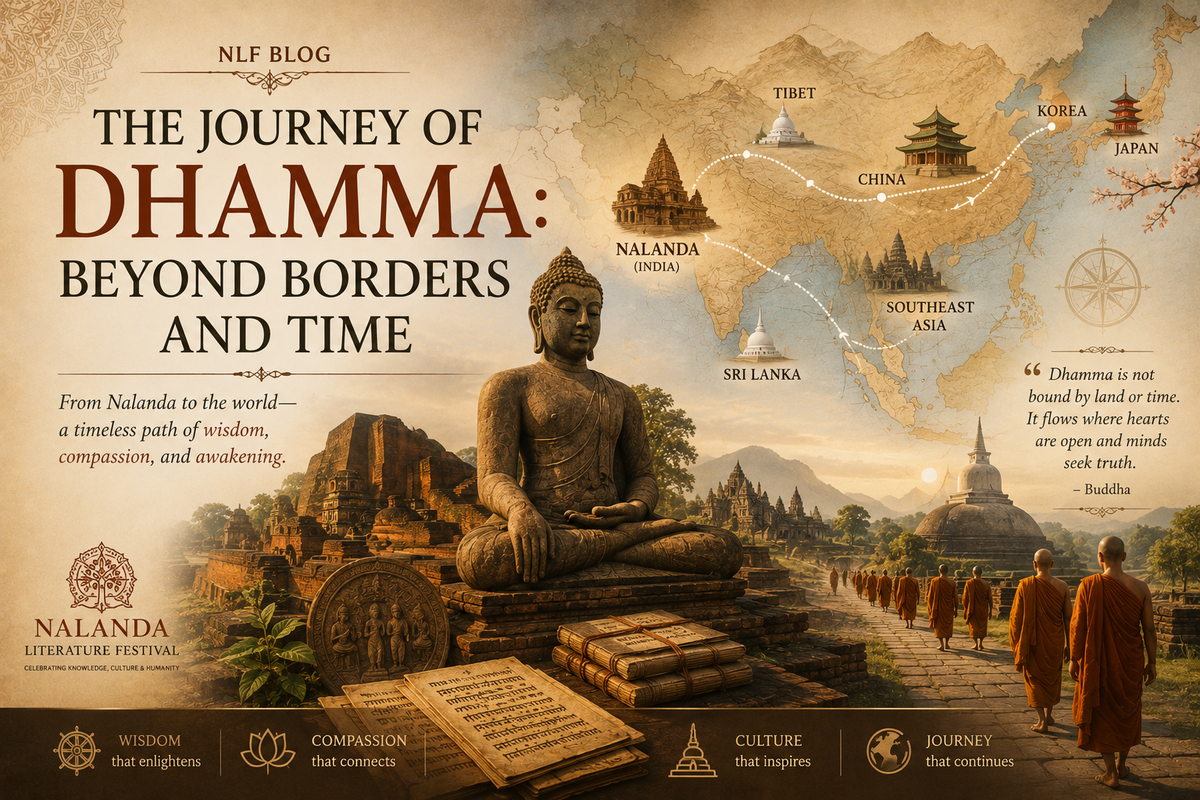
When we hear the word "Dhamma," many immediately think of the teachings of the Buddha—wisdom guiding ethical living and mental clarity. But what truly fascinates is how this ancient philosophy spread far beyond its origins, weaving into the fabric of cultures across Asia and even influencing the modern world in unexpected ways.
Dhamma, derived from the Pali term meaning "cosmic law" or "truth," is more than a religious doctrine. It’s a universal principle about living in harmony with reality. What’s lesser known is how the spread of Dhamma was one of the earliest examples of cross-cultural exchange, carried not just by monks but also by traders, diplomats, and even warriors.
For instance, Emperor Ashoka of the Maurya Empire (3rd century BCE) famously promoted Dhamma beyond India. After his transformative embrace of Buddhist principles, Ashoka sent emissaries with Dhamma edicts inscribed on rocks and pillars, extending from the Indian subcontinent all the way to regions of modern-day Afghanistan and Sri Lanka. These inscriptions reveal one of history’s first attempts to govern through moral and ethical guidance rather than mere law enforcement.
Moreover, Dhamma’s influence can be traced to the Silk Road, where Buddhist ideas mixed with Zoroastrianism, Daoism, and Hellenistic philosophies. This cross-pollination fostered unique schools of thought, such as the Greco-Buddhist art and philosophy in Gandhara, blending Greek realism with Buddhist iconography—an artistic testament to Dhamma’s adaptability.
Another intriguing facet is how Dhamma transcended its Buddhist roots to subtly influence non-Buddhist societies. In Japan, for example, even though Zen Buddhism is a later development, the underlying principles of Dhamma about mindfulness and impermanence seeped into cultural practices like tea ceremonies and martial arts. This illustrates how Dhamma’s essence has permeated daily life far beyond formal religious settings.
Fast-forward to today, scholars and mindfulness practitioners worldwide are rediscovering Dhamma’s timeless relevance. Neuroscience even shows how meditation practices rooted in Dhamma can reshape the brain’s response to stress and pain. This modern validation bridges ancient wisdom with contemporary science, turning the spread of Dhamma into a continuing journey rather than a completed chapter.
So next time you hear about Dhamma, remember it’s not just an ancient teaching locked in monasteries. It’s a living, breathing philosophy that has traveled continents, morphed with cultures, and now quietly shapes lives globally—inviting each of us to explore truth, compassion, and balance in our own way.