

चौक
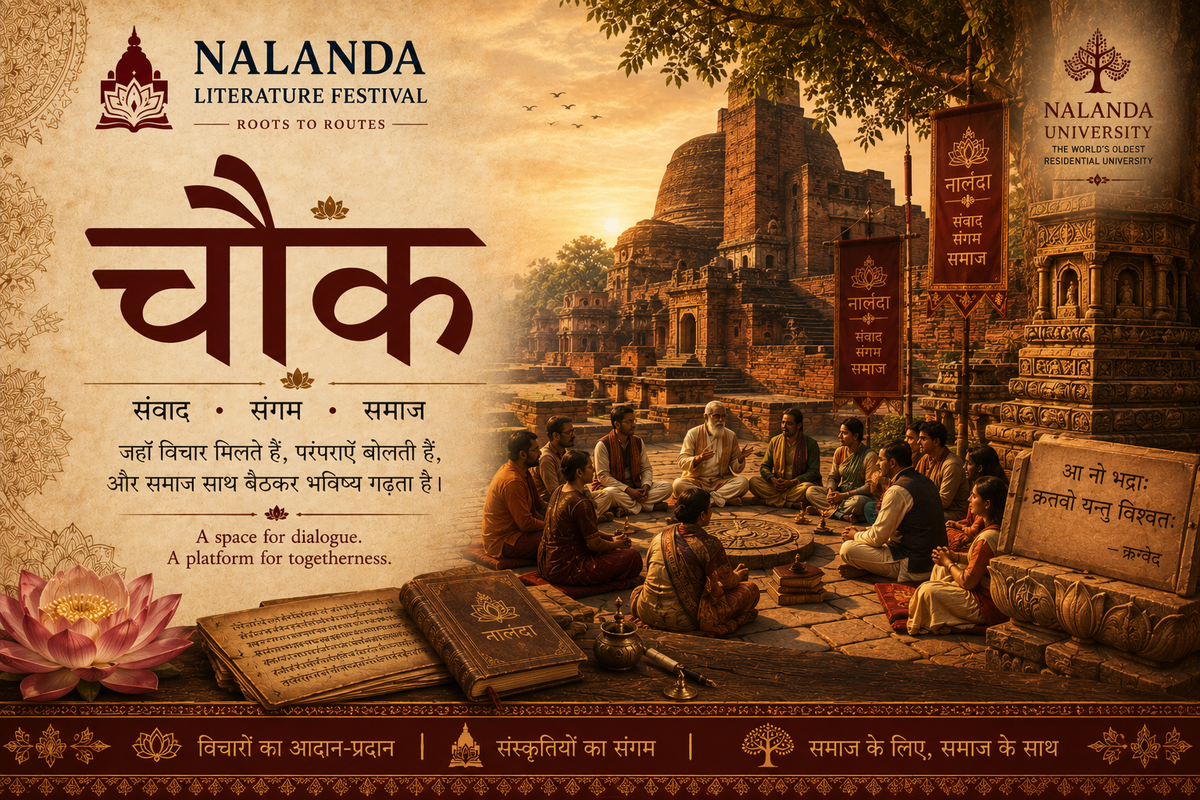
The Sacred Floor Art of Magadh, the Land of Sun Worshippers — where Sun temples rise from the plains and cattle are led home over rice-paste paths, even the floor becomes a prayer.
Magadh — the ancient kingdom spanning Gaya, Aurangabad, Nawada, Nalanda and Jehanabad — is literally the land of sun worshippers. Sun worship took definitive shape here during the Gupta period, and the region is studded with historic Sun temples: Deo in Aurangabad, Dakshinaarka in Gaya, and Badgaon-Aungari in Nalanda. Against this solar, agricultural backdrop, the traditional rangoli of Magadh unfolds as two intertwined practices — one addressed to the sky, the other to the earth.
Chhath Puja: The Solar Floor Art
Bihar's most important festival, Chhath, is a four-day vrata dedicated to Surya and Chhathi Maiya. Offerings are arranged in bamboo ḍālās, each sanctified with kumkum and a rice paste called piṭhāra. Performed without a priest, devotees stand waist-deep in water offering arghya to the setting and rising sun. The piṭhāra is the Magadh cognate of the alpana — rice paste on bamboo, a hand raised to the sky.
Chauk Purana: The Cattle-Welcome Art
Running alongside is Chauk Purana, the floor painting of the Bandna (Sohrai) cattle-thanksgiving festival, known among Magahis as Gaiya dardh. Chauk means square; purana means filling. What makes it singular is its drip technique: a viscous rice paste (guri) bound with Gamar-tree mucilage is poured through all five fingers held above the ground — gravity does the drawing. Vermilion dots mark every intersection as fertility symbols; the composition reads as a sacred path guiding cattle home.
The Earth as Canvas, the Sun as Witness
Together, the solar piṭhāra of Chhath and the bovine Chauk Purana of Bandna constitute the traditional rangoli of Magadh. One looks skyward to Surya; the other earthward to cattle. Both share the same grammar — cow-dung-primed earth, rice paste, fingers — and the same conviction: the ground must be made sacred before the gods descend.
(Sources: Asia InCH; Sahapedia; Daricha Foundation; Rupkatha Journal; Times of India.)