
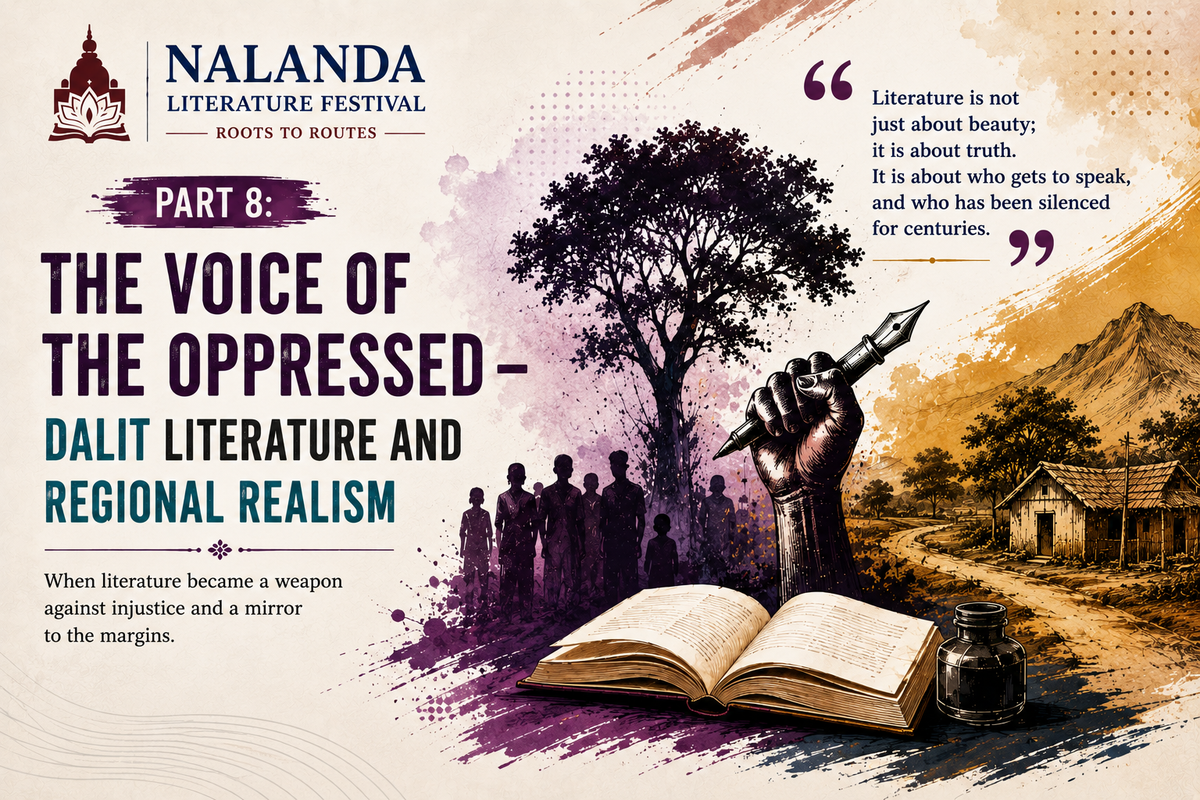
PART 8: The Voice of the Oppressed – Dalit Literature and Regional Realism
"Māṇasānē māṇasāśī māṇasāsārakhē vāgṇē hyāpēkṣā moṭhā dharma koṇatā?"
— "What greater creed is there than treating every human being with dignity?"
In the decades following India's independence, Marathi literature witnessed the most revolutionary literary movement in modern Indian history. Breaking away from elite, urban sensibilities, a new generation of writers emerged from marginalized communities, bringing raw, authentic, and unvarnished lived experiences onto the printed page.
At the Nalanda Literature Festival (NLF), we champion literature that gives voice to the unheard and expands the boundaries of human empathy. The Dalit Literature movement in Maharashtra fundamentally reshaped Indian literary aesthetics by challenging traditional notions of beauty and merit.
Pioneers like Baburao Bagul, with his explosive short story collection Jevha Mi Jaat Chorli Hoti (When I Hid My Caste), exposed systemic social cruelties. Iconic poets like Namdeo Dhasal, founder of the Dalit Panthers, unleashed visceral street poetry through Golpitha, depicting urban squalor and human resilience. Autobiographical masterpieces like Daya Pawar’s Baluta and Sharan Kumar Limbale’s Akkarmashi set global benchmarks for life-writing.
Simultaneously, Grameen Literature (Rural Realism) represented by writers like Anand Yadav (Zombi) and R. R. Borade brought the struggles of agrarian communities into sharp focus.
By forcing society to confront uncomfortable truths, Dalit and Regional Realist literature proved that genuine art lies in truth and human dignity—a principle that lies at the heart of NLF’s core values.
To Be Continued (क्रमशः):**
Parallel to these social prose movements, Marathi theater emerged as a global artistic powerhouse! How did playwrights like Vijay Tendulkar and P. L. Deshpande revolutionize modern drama? Find out in Part 9: The Golden Stage – Modern Marathi Theater and Playwriting.