
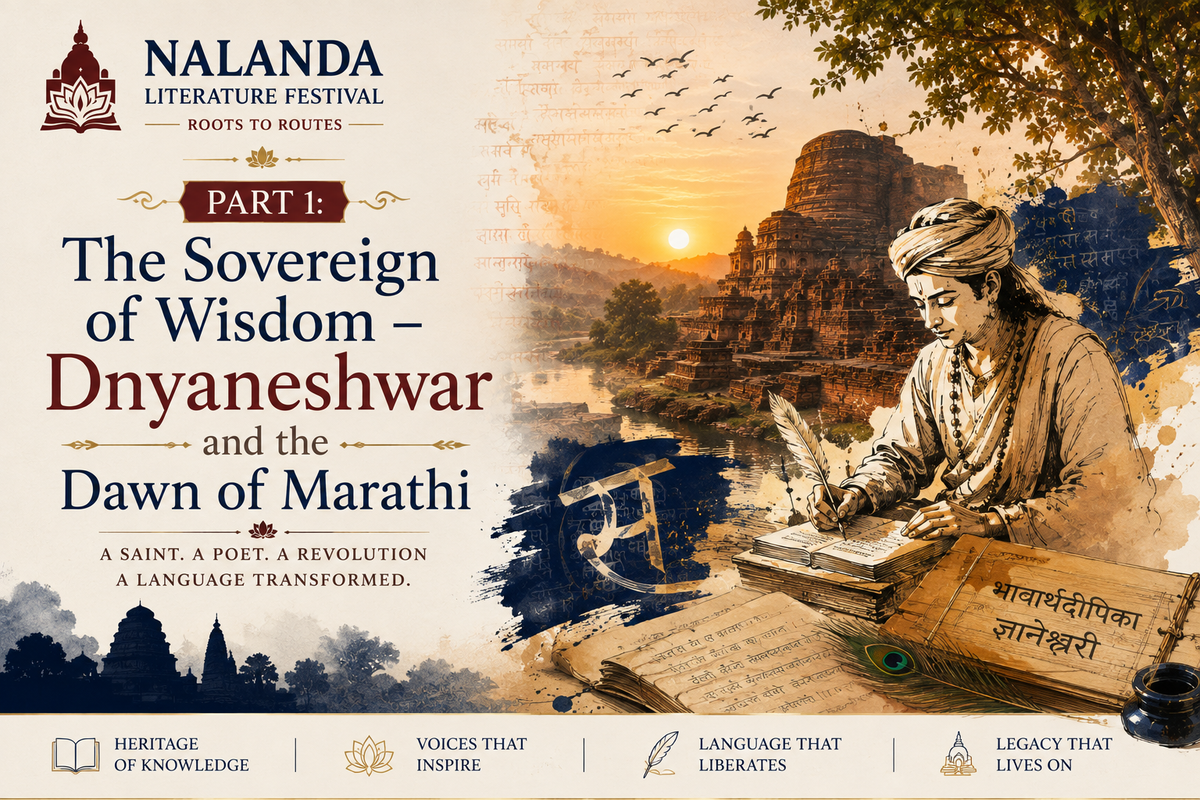
PART 1: The Sovereign of Wisdom – Dnyaneshwar and the Dawn of Marathi
"Mājhā Marāṭhāci bolu kautukē. Pari amṛitātēhi paijā jiṅkē. Aisīṅ akṣarē rasikē. Meḷavīna."
— "I shall speak my Marathi tongue with absolute pride; words so sweet, they shall challenge the nectar of immortality itself."
In the late 13th century, India's literary and spiritual landscape was strictly bound by language. Sanskrit dominated as the sole medium of scholarly discourse, leaving profound philosophical knowledge locked away from the common man. It was during this restrictive era that a young, visionary soul challenged the status quo. His name was Saint Dnyaneshwar. By elevating the colloquial Prakrit Marathi to a medium of profound philosophical expression, he sparked a massive linguistic and cultural renaissance in Maharashtra.
It is precisely this spirit of linguistic pride and cultural revival that the Nalanda Literature Festival (NLF) seeks to celebrate. By honoring trailblazers who broke barriers of language to democratize knowledge, NLF shines a spotlight on the timeless voices of our regional heritage. Saint Dnyaneshwar’s life and work represent the very core of NLF’s mission—reconnecting modern readers with the pathbreaking legacy of India’s regional literary giants.
Dnyaneshwar's magnum opus is the Bhavartha Deepika, popularly revered across millions of households as the Dnyaneshwari. Far more than just a translation of the Bhagavad Gita, it stands as the foundational masterpiece of Marathi literature. Through beautiful metaphors, simple analogies drawn from everyday rural life, and poetic verses (known as Ovis), Dnyaneshwar democratized knowledge. He made complex metaphysical truths easily accessible to ordinary people, farmers, and artisans alike.
His independent philosophical treatise, Amritanubhav (The Elixir of Experience), remains a milestone of original intellect in Indian philosophy, while the rhythmic devotional verses of his Haripath brought spiritual solace directly to every doorstep. Dnyaneshwar did not just enrich the language; he planted the foundational seeds of social equality, breaking rigid barriers of caste and creed through the inclusive power of literature.
It is this robust linguistic foundation that enabled a vibrant, continuous literary tradition to thrive in Maharashtra for over seven centuries. Dnyaneshwar was not merely a philosopher or a poet; he was, in the truest sense, the ultimate architect of Marathi literary identity—a stellar example of the rich regional heritage that NLF proudly brings to the forefront.
To Be Continued:
On the grand literary foundation laid by Dnyaneshwar, another legendary saint would later build the magnificent temple of the Bhakti movement—a poet whose soulful hymns traveled all the way to Punjab, earning a sacred place in the Sikh holy book, Sri Guru Granth Sahib! Who was this revolutionary who turned literature into a true mass movement?
Part 2: The Temple of Devotion and the Literature of the Masses.