
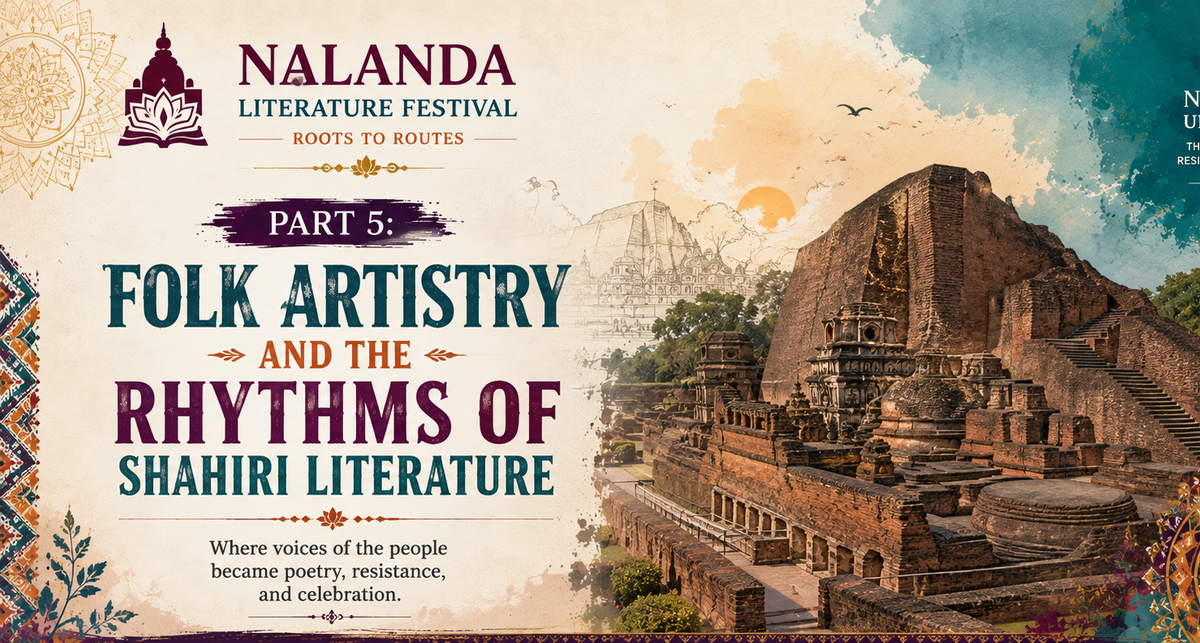
PART 5: Folk Artistry and the Rhythms of Shahiri Literature
"Lavaṇīcyā tāḷāvar, saṅgītācyā surāñcyā jhāṇkārāvar, lokakalēne gājavalā mahārāṣṭra!"
— "To the rhythm of Lavani and the resonance of music, folk art captured the heart of Maharashtra!"
As the political landscape stabilized in the 18th century during the Peshwa era, Marathi literature found a vibrant expression in the performing arts. Beyond royal courts and religious assemblies, literature moved to open-air stages, rural fairs, and community gatherings through dynamic folk traditions.
At the Nalanda Literature Festival (NLF), we celebrate folk literature as the soul of regional identity. The 18th-century *Shahiri* literature, characterized by *Lavani* (lyric-musical poetry) and *Tamasha* (folk theater), represents a brilliant fusion of poetic elegance, romanticism, and sharp social commentary.
Master Shahirs like Honaji Bala, Anant Phandi, and Ram Joshi elevated folk poetry into a highly sophisticated literary genre. Honaji Bala popularized the classical musical foundation of *Ghanashyam Sundara*, while Anant Phandi transitioned from romantic compositions to profound moral and social critique, famously advising society to live with dignity and restraint (*"Bikhaṭ vāṭ vahivaāṭ nasāvī..."*).
These folk compositions were not merely entertainment; they reflected the emotional landscape, romantic sensibilities, and social realities of contemporary society. By blending folk music with poetic storytelling, Shahiri literature bridged the gap between classical literary aesthetics and grassroots cultural participation.
This rich tradition of folk literature highlights the dynamic adaptability of Marathi narrative art—celebrating human emotions and community spirit in a manner that NLF honors with great enthusiasm.
To Be Continued (क्रमशः):**
With the advent of the 19th century and the introduction of printing presses, modern Marathi prose underwent a dramatic transformation! How did social reformers use essays, newspapers, and novels to spark the Indian Renaissance? Find out in Part 6: The Modern Renaissance – Reformists, Novels, and Social Awakening.