
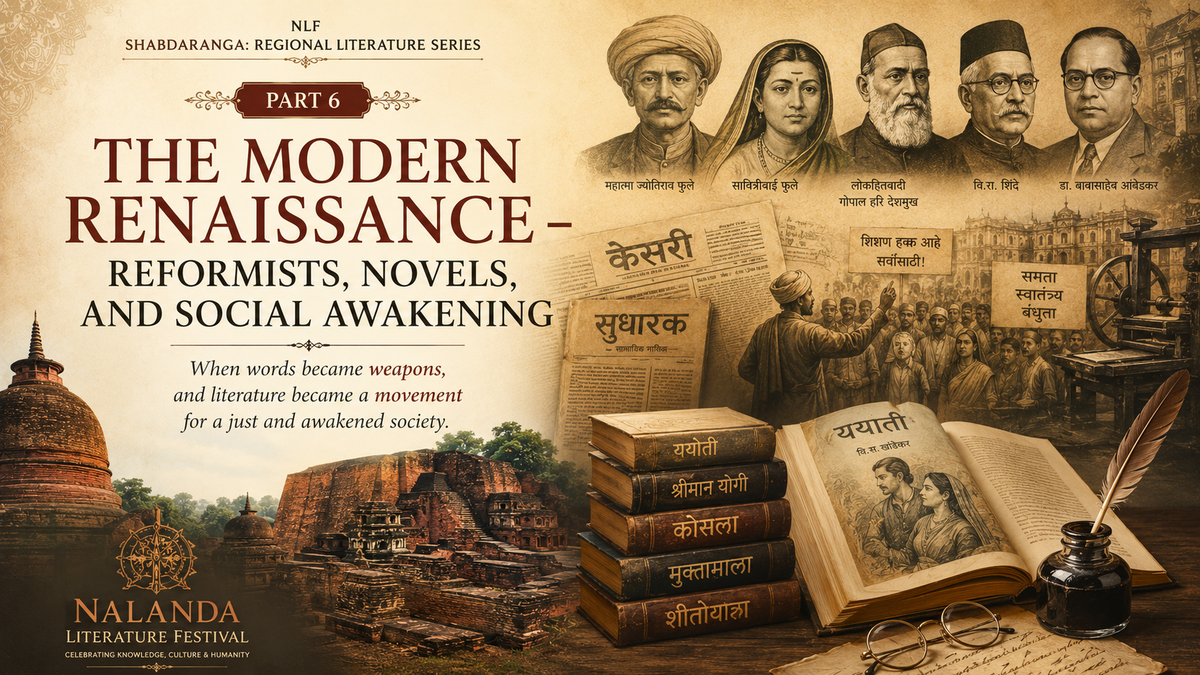
PART 6: The Modern Renaissance – Reformists, Novels, and Social Awakening
"Vidyāvinā matī gelī, matīvinā nītī gelī... Itke anartha ekā avidyēne kelē!"
— "Without education, intellect was lost; without intellect, morality was lost... So much ruin caused by ignorance alone!"
The 19th century brought radical changes to Western India with the introduction of modern printing technology, English education, and institutional journalism. Marathi literature underwent a profound transformation, shifting from traditional verse to analytical prose, critical essays, and social novels.
At the Nalanda Literature Festival (NLF), we highlight the power of literature as a catalyst for social reform and intellectual emancipation. The Marathi Renaissance was led by visionary thinkers who recognized that societal progress required a complete overhaul of traditional orthodoxy through rational discourse.
Iconic reformers like Mahatma Jyotirao Phule revolutionized prose with groundbreaking works like Gulamgiri and Shetkarayacha Asud, critiquing caste oppression and championing universal education. Simultaneously, Lokmanya Bal Gangadhar Tilak used his newspaper Kesari to ignite political consciousness, while Gopal Ganesh Agarkar advocated fierce rationalism and women's rights through Sudharak.
This era also witnessed the birth of the Marathi novel. Baba Padmanji’s Yamuna Paryatan (1857), considered the first Marathi novel, addressed the plight of widows with unprecedented empathy. Later, Hari Narayan Apte modernized storytelling through realistic social and historical novels.
By transforming literature into a tool for social justice, gender equality, and intellectual liberty, the 19th-century pioneers laid the groundwork for modern Indian critical thought—a value core to NLF’s mission.
To Be Continued (क्रमशः):**
As the 20th century unfolded, Marathi poetry experienced a dazzling romantic and philosophical rebirth! How did poets like Keshavsut and Kusumagraj inspire generations with verses of freedom and passion? Find out in Part 7: Romanticism and Revolution – The Golden Era of Modern Poetry.