

Saaj: The Material World of Ancient Magadha
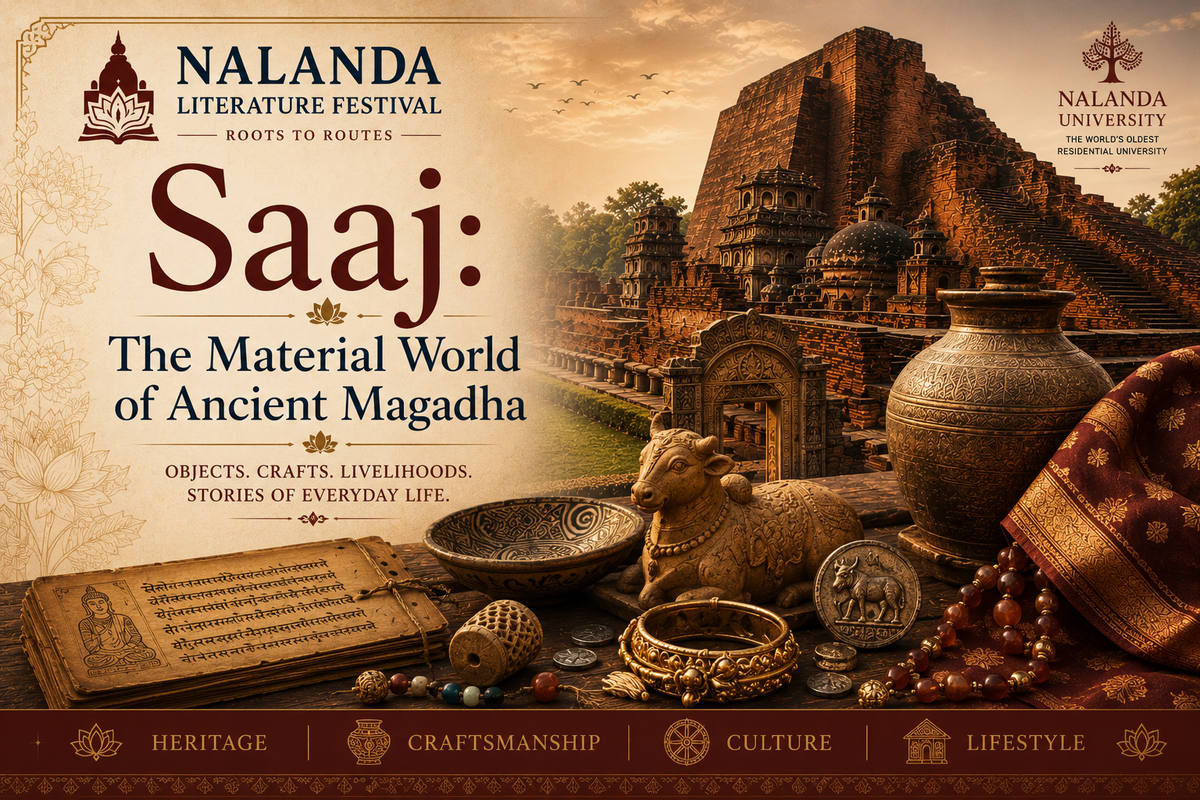
When we think of ancient Magadh, our minds instantly picture formidable empires, massive stone stupas, or grand philosophical debates. Yet, beneath the political and monastic narratives lies a vibrant, sensory world of daily aesthetics – one preserved not just in silent ruins, but in the vivid descriptions of ancient Indian literature and technical manuals.
Long before modern design houses existed, the material culture of Greater Magadha set benchmarks for elegance across the subcontinent. In Kautilya's Arthashastra, we find meticulous records of Magadhan trade in exquisite textiles, including fine dukula (silks) and kshauma (linen). Weavers were regulated to increase thread weight by soaking in rice-gruel in the ratio of 10:11 for general cloth, 1:1.5 for linen/silk. The legendary "Hansa dukula" (swan-patterned fabric) was so prized that it was said that gods and kings wore it, as Banabhatta records in his descriptions of Harsha's court.
Fashion was an art of drapery and detail: unstitched garments draped with effortless precision, paired with waistbands (mekhala) and armlets (keyura). These weren't mere clothing choices but sophisticated statements of social standing and seasonal adaptation.
We even have Archaeological evidence supporting the same.
Terracotta figurines excavated from historic sites like Pataliputra and Buxar offer a stunning visual companion to these texts. At Kumrahar(in Patna), archaeologists discovered the "Smiling Girl" (Mauryan period, 2nd century BCE) – a small terracotta head with elaborate lateral horns rising from her coiffure, one end ornamented with a large clip. Nearby, the "Dancing Girl" bears resemblance to the famous Harappan figure, wearing an ornate costume and sumptuous headdress.
These figurines reveal elaborate, voluminous headdresses, beaded necklaces, and heavy ear ornaments worn by ordinary citizens and elites alike. But jewelry was not merely a symbol of wealth; as Bharata Muni’s Natyashastra notes regarding regional ornamentation (Aharya Abhinaya), it was a deeply curated aesthetic language where distinct motifs represented regional pride and cultural identity. The Natyashastra classifies ornaments into four types: pierced (avedhya), tied (bandhinya), worn (praksepya), and round (aropya).
The Architecture of Pleasure
Even daily spatial aesthetics reflected a culture obsessed with harmony and beauty. From cooling pleasure gardens (pramadavana) equipped with terracotta water channels to decorated inner courtyards, Magadhan urban planning prioritized sensory experience.
Megasthenes' account of Pataliputra's royal palace describes it surrounded by lush parks, manicured gardens, and tranquil ponds, ornamental trees, tame peacocks, and lakes full of sacred fish. The city itself was ringed by imposing wooden walls with 64 gates and 570 towers, surrounded by a broad, deep moat – a testament to sophisticated engineering and aesthetic sensibility.
At Kumrahar, archaeologists uncovered the 80-pillared hall – originally a royal court that evolved into Ashoka's Buddhist assembly hall, where the third Buddhist council was convened. Nearby, terracotta ring-wells from Period II (150 BCE to 300 CE) reveal advanced water management systems in residential areas.
Today, the Bihar Museum preserves these treasures – from rare Gupta-period sculptures like the Kalyan Sundara relief to the terracotta figurines that capture everyday life. The 28 Naigamesha figurines discovered at Kumrahar indicate the presence of monastic hospital complexes, showing how aesthetics and practical care intertwined.
As we celebrate literature and history at the Nalanda Literature Festival, looking back at Magadh’s material culture reminds us that heritage isn’t only found in ancient manuscripts or monumental architecture. It lives in the textures, ornaments, and aesthetic sensibilities that our ancestors crafted with their own hands – a legacy of design that continues to inspire us even in this day and age.
This legacy of design where quality textiles, thoughtful ornamentation, and harmonious spaces reflected deeper cultural values, continues to inspire Indian creativity. It reminds us that true elegance lies not in grandeur alone, but in the attention to detail, the respect for craftsmanship, and the understanding that beauty belongs to everyday life.
In Magadh's material culture, we find a civilization that didn't just build empires – it built beautiful lives, one draped garment, one ornament, one garden at a time.