

Beyond Earth and Time – The Evolution of Marathi Science Fiction
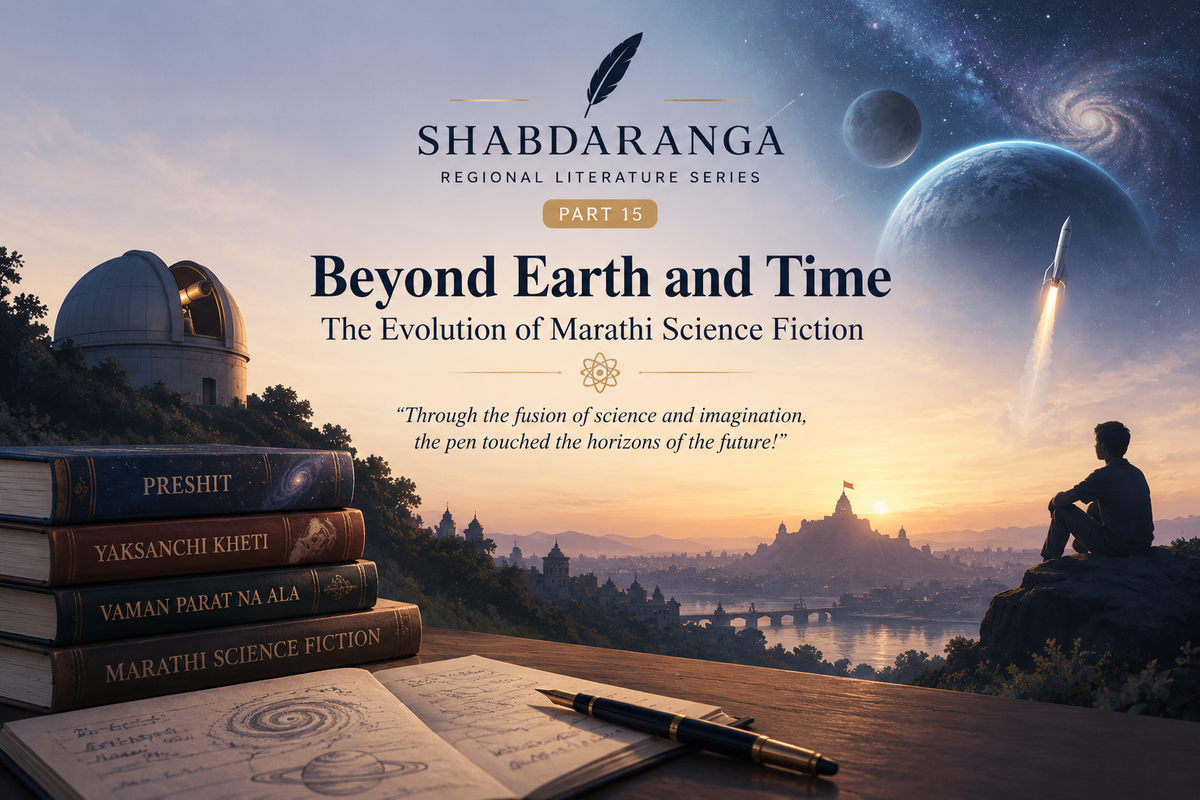
"Vijñāna un kalpanāśaktīcyā melātun lekhṇīne bhaviṣyācyā kṣitijānā sparaśa kelā!"
— "Through the fusion of science and imagination, the pen touched the horizons of the future!"
While regional Indian literature is often celebrated for historical and social realism, Marathi literature broke new ground by developing a rich, highly sophisticated tradition of Science Fiction (Vidyan Katha). This genre combined complex scientific principles with human emotions, ethics, and philosophical inquiries.
The pioneer of modern Marathi science fiction is eminent astrophysicist Dr. Jayant Narlikar. Through his groundbreaking novels like Preshit, Yaksanchi Kheti, and Vaman Parat Na Ala, Dr. Narlikar demystified advanced concepts like astrophysics, artificial intelligence, and extraterrestrial life, embedding them within culturally authentic Indian contexts. His work proved that hard science could be seamlessly narrated in regional languages.
Other prolific writers expanded the boundaries of this genre. D. P. Khambete and Narayan Dharap introduced suspense and cosmic mystery, while Subodh Javdekar, Niranjan Ghate, and Dr. Bal Phondke wrote thought-provoking stories addressing biotechnology, environmental degradation, and digital futures. These narratives questioned the ethical consequences of unchecked technological advancement on human society.
Science fiction demonstrates a language’s capability to engage with future-oriented global discourse. The Nalanda Literature Festival (NLF) platforms speculative and scientific regional literature, promoting rationalism and creative foresight across Indian literary traditions.
To Be Continued (क्रमशः):
How did the art of translation bridge language barriers and bring world classics into the regional idiom? Find out in Part 16: The Art of Translation – Building Bridges Across World Literatures.