
Breaking the Silence – Women Voices in Modern Marathi Literature
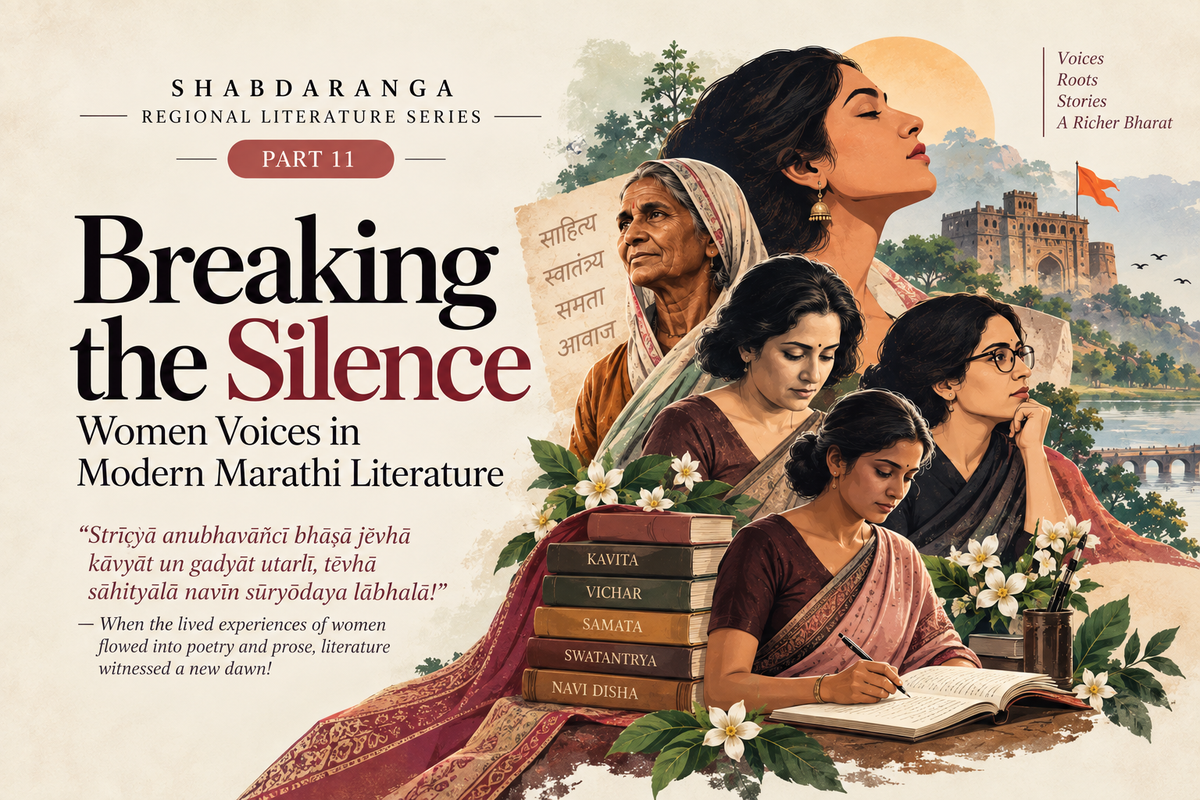
"Strīcyā anubhavāñcī bhāṣā jēvhā kāvyāt un gadyāt utarlī, tēvhā sāhityālā navīn sūryōdaya lābhalā!"
— "When the lived experiences of women flowed into poetry and prose, literature witnessed a new dawn!"
The evolution of modern Marathi literature is incomplete without recognizing the transformative contributions of women writers. Emerging from patriarchal constraints, women authors carved out a distinct literary space, bringing raw emotional honesty, domestic realities, and sharp social critiques into regional discourse.
Early trailblazers like Bahinabai Chaudhari, an unschooled rural poetess, composed timeless verses of oral poetry (Ovi) reflecting profound philosophy derived directly from nature and farming life. In formal prose, writers like Vibhavari Shirurkar (Malatibai Bedekar) shocked mid-20th-century society with Kalyanche Nishwas, courageously writing about women's autonomy, desires, and psychological struggles.
In the post-independence era, Shanta Shelke enriched Marathi literature with exquisite lyricism, translated classics, and evocative memoirs. Concurrently, Gauri Deshpande introduced a bold, uninhibited feminist voice in modern fiction, while Kamala Padhye and Pranya Daya Pawar explored complex socio-political realities through their poetry and narratives. Furthermore, Dalit women writers like Baby Kamble (Jina Amucha) documented double marginalization with unprecedented authenticity.
Women’s writings transformed literature from abstract philosophy into lived human truth. The Nalanda Literature Festival (NLF) provides an inclusive national platform for these diverse feminist perspectives, reinforcing Bharat’s multi-lingual narrative of gender equality and intellectual freedom.
To Be Continued (क्रमशः):
Beyond formal prose and theater, how did humor and satire become powerful tools for social observation and mental resilience? Find out in Part 12: Wit, Satire, and Social Reflection in Marathi Humor Literature.