

Soil, Struggles, and Agrarian Realities – The Rise of Rural Literature
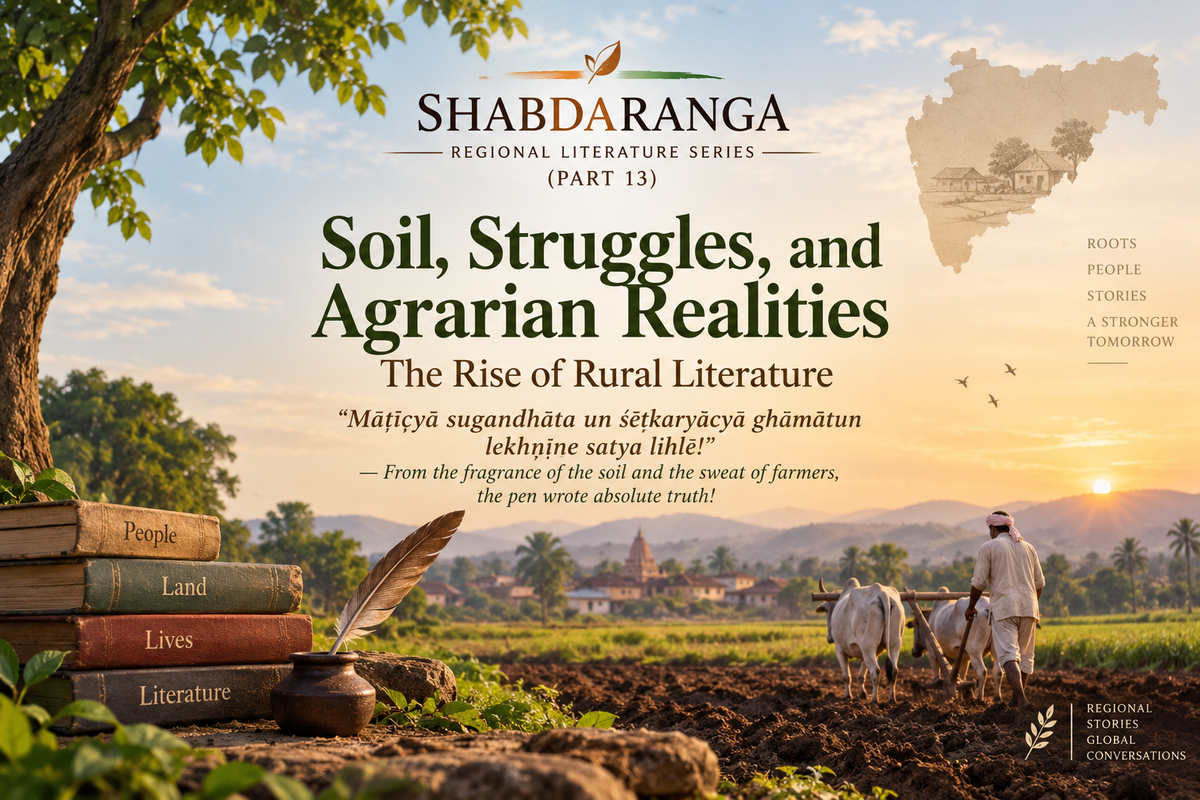
"Māṭīcyā sugandhāta un śētkaryācyā ghāmātun lekhṇīne satya lihlē!"
— "From the fragrance of the soil and the sweat of farmers, the pen wrote absolute truth!"
For decades, modern regional literature remained predominantly centered around urban, educated middle-class life. However, a major literary paradigm shift occurred when writers rooted in rural landscapes began depicting the authentic agrarian economy, village politics, and the raw struggles of farming communities.
This movement, known as Grameen Sahitya (Rural Literature), brought the rustic flavors of Maharashtra’s varied topographies into mainstream fiction. Vyankatesh Madgulkar’s masterpiece Bangarwadi set an international benchmark by portraying the harsh reality of a drought-stricken village and the quiet resilience of its pastoral inhabitants. His writing avoided romanticizing village life, choosing unvarnished realism instead.
Following this path, Anand Yadav presented deeply evocative autobiographical works like Zombi, detailing the arduous journey of a rural youth striving for education against poverty. Authors like R. R. Borade, Nagnath Kottapalle, and Baban Shinde further expanded this genre by documenting rural women's labor, changing village dynamics, and agrarian distress caused by industrialization.
Rural literature ensures that the agrarian soul of the nation remains central to literary consciousness. The Nalanda Literature Festival (NLF) actively platforms rural and grassroots narratives, connecting regional roots with global discourse to foster a comprehensive understanding of Indian reality.
To Be Continued (क्रमशः):
As regional literature expanded, how did children's literature and youth magazines nurture the imagination of upcoming generations? Find out in Part 14: Nurturing Young Minds – The Legacy of Children’s Literature.