
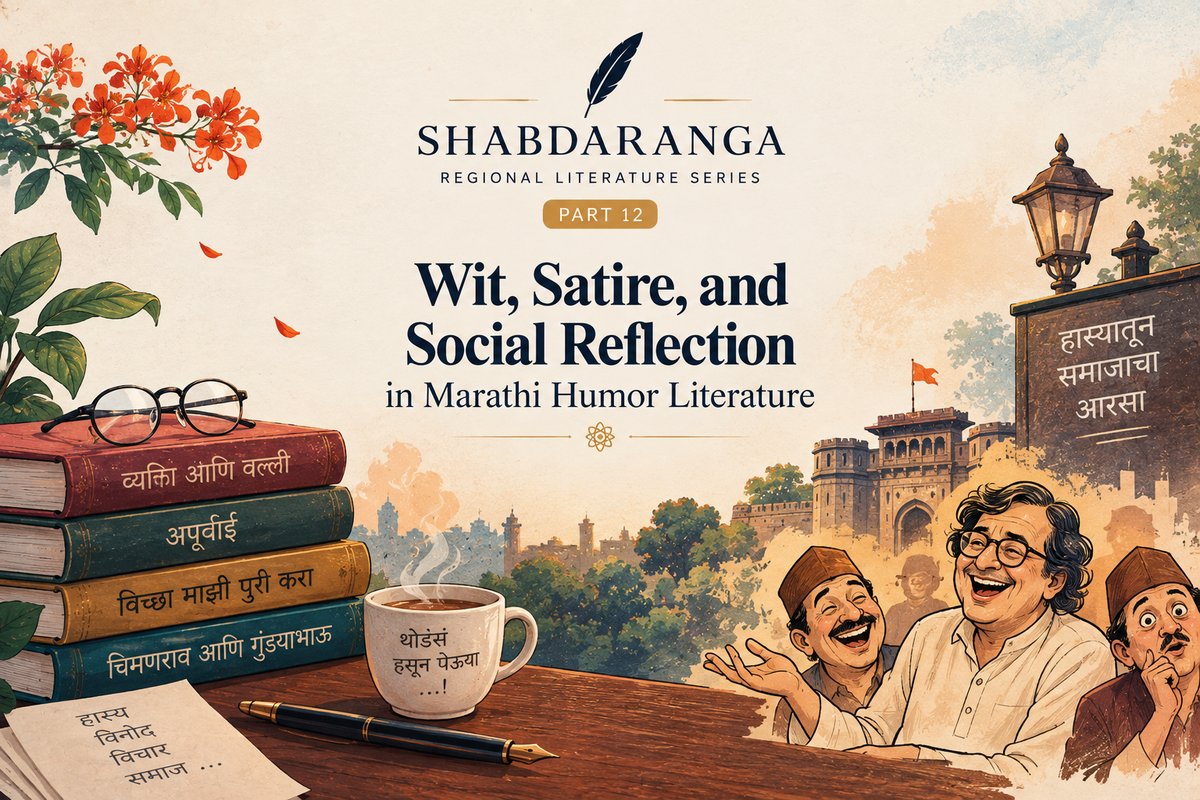
Wit, Satire, and Social Reflection in Marathi Humor Literature
"Vinōd hā kēvaḷ hasavaṇyāsāṭhī nasūn, tō samājācā arśā dākhavaṇārā prabhāvī prāṁta āhē!"
— "Humor is not merely for laughter; it is a powerful mirror reflecting the realities of society!"
Humor in regional Indian literature has rarely been limited to light entertainment. In Marathi literary history, wit and satire developed into sophisticated instruments used to critique social absurdities, bureaucratical flaws, and class hypocrisy while providing emotional relief to everyday readers.
The golden age of Marathi humor was shaped by literary stalwarts who brought keen observational skills to short stories and essays. Shripad Krishna Kolhatkar and Ram Ganesh Gadkari laid early foundations with witty social commentaries. However, P. L. Deshpande (Pu. La.) elevated humor into an immortal art form. Through his iconic character sketches in Vyakti Ani Valli and humorous travelogues like Apoorvayi, Pu. La. celebrated the eccentricities of ordinary middle-class lives with immense warmth and empathy.
Simultaneously, writers like C. V. Joshi created legendary comedic duos like Chimanrao and Gundyabhau, while Vasant Sabnis used political satire in folk theater formats like Vichha Majhi Puri Kara to challenge authority. Later, D. M. Mirasdar and Vyankatesh Madgulkar brought rural humor to life, capturing village anecdotes with authentic dialect and razor-sharp timing.
Humor literature highlights the intellectual maturity of a culture capable of self-reflection. The Nalanda Literature Festival (NLF) celebrates these diverse satirical traditions across Indian languages, proving that shared laughter is a vital thread in national integration.
To Be Continued (क्रमशः):
How did the soil of rural India find its authentic voice away from urban-centric narratives? Find out in Part 13: Soil, Struggles, and Agrarian Realities – The Rise of Rural Literature.