
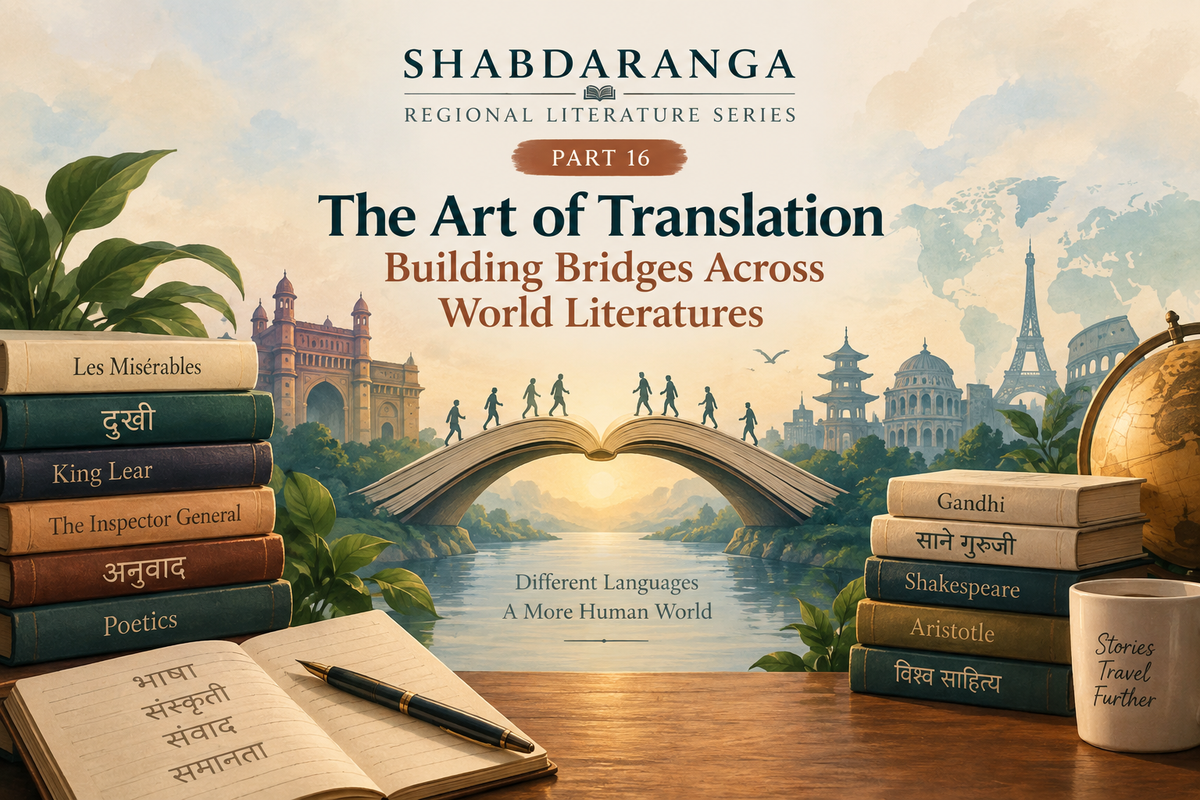
The Art of Translation – Building Bridges Across World Literatures
"Anuvād hā don saṁskṛtīñnā joḍṇārā sarvāt suṁdar sētu āhē!"
— "Translation is the most beautiful bridge connecting two cultures!"
Literature expands its horizons when it welcomes voices from other languages. In Maharashtra, the tradition of literary translation (Anuvad) played a pivotal role in enriching the regional vocabulary, introducing readers to world classics, masterworks from other Indian languages, and diverse philosophical traditions.
Pioneering translators recognized that translating a text is not merely a word-for-word substitution, but a cultural re-creation. Great literary figures took up translation as a sacred responsibility. Sane Guruji translated Victor Hugo's Les Misérables (Dukhi) and Mahatma Gandhi's works into Marathi, bringing international humanism to local homes. Similarly, P. L. Deshpande brilliantly adapted European plays like Ernest Hemingway’s works and Nikolai Gogol’s The Inspector General (Amaldar) with perfect regional sensibility.
Furthermore, translators like Vinda Karandikar translated Aristotle's Poetics and Shakespeare's King Lear, while A. K. Bhagwat and Uma Kulkarni bridged the gap between South Indian languages (like Kannada and Malayalam) and Marathi. This cross-pollination enriched local prose style and broadened reader perspectives.
Translation embodies the true spirit of literary exchange. The Nalanda Literature Festival (NLF) actively celebrates translators as cultural ambassadors who unite Bharat’s multi-lingual narrative and connect regional voices to global literature.
To Be Continued (क्रमशः):
Beyond books, how did lyric writing and film music carry poetic aesthetics into every household? Find out in Part 17: Poetry in Melody – The Symbiosis of Marathi Literature and Cinema.