
The Echo of the Soil – Folk Literature, Powadas, and Oral Traditions of Maharashtra
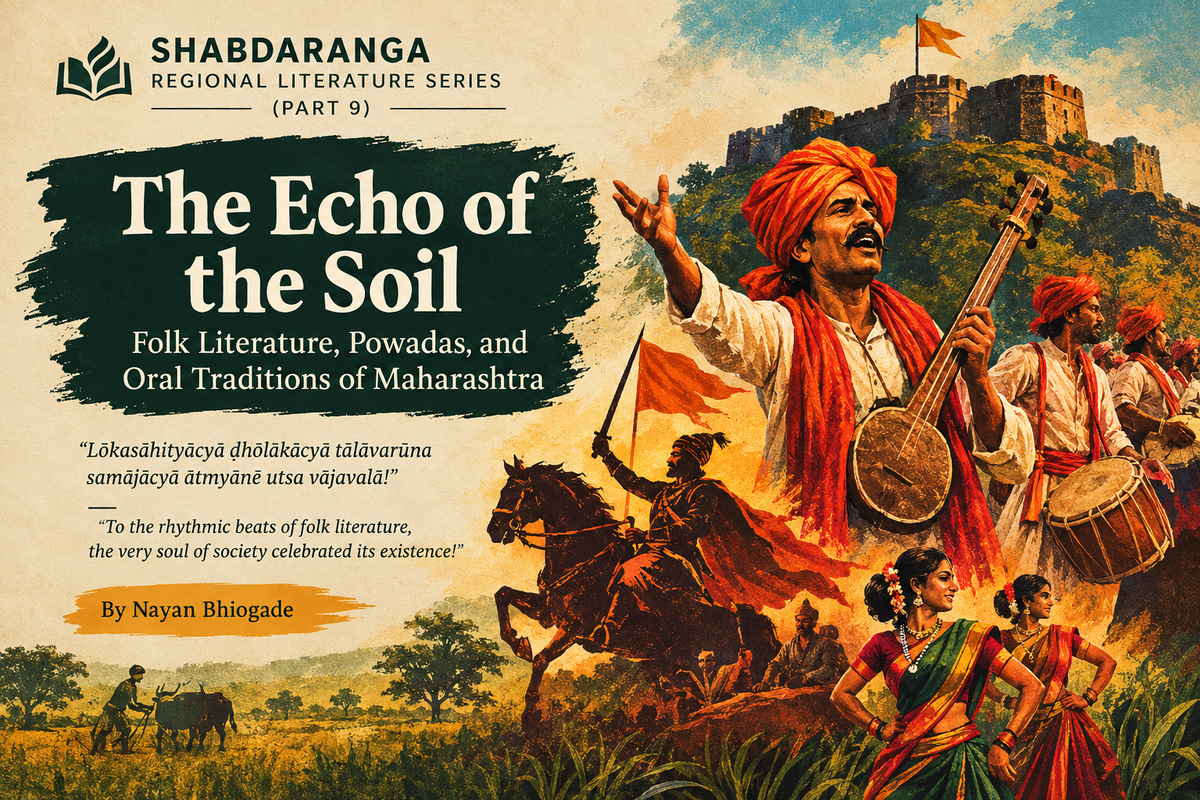
"Lōkasāhityācyā ḍhōlākācyā tālāvarūna samājācyā ātmyānē utsa vājavalā!"
— "To the rhythmic beats of folk literature, the very soul of society celebrated its existence!"
Long before printed books and academic journals reached the masses, Maharashtra’s rich oral traditional literature (Loksahitya) served as the primary medium for preserving cultural history, heroic sagas, and social philosophy. Rooted deeply in the agrarian soil, folk literature represented the raw, uninhibited voice of everyday people.
The most powerful genre within this tradition is the Powada (ballad singing). Catalyzed during the era of Chhatrapati Shivaji Maharaj, Shahirs (folk poets) like Agnandas and Tulsidas composed stirring accounts of battle victories, strategic brilliance, and martyrdom, such as the famous Tanaji Malusare Powada. In later centuries, Shahirs like Anant Phandi, Honaji Bala, and Ram Joshi elevated Lavani and Bharud into popular poetic forms, blending romantic imagery with sharp moral and philosophical commentary.
In the 20th century, folk traditions underwent a revolutionary transformation. Progressive movements repurposed folk formats into Ambedkari Jalse and Satyashodhak street plays. Legendary poet-activists like Shahir Annabhau Sathe, Shahir Amar Sheikh, and Shahir D N Gavankar used the thunderous rhythm of the Dholki and Powadas to mobilize the working class, demand labor rights, and inspire the Samyukta Maharashtra Movement.
Folk literature proves that high literary merit can exist outside formal text, thriving directly in the collective memory of the people. The Nalanda Literature Festival (NLF) honors these oral traditions and folk performance arts as indispensable pillars of Bharat’s vibrant, multi-lingual narrative heritage.
To Be Continued (क्रमशः):
While folk traditions resonated in open fields and village squares, how did post-independence novelists transform historical chronicles into epic prose? Find out in Part 10: The Epic Dimensions of Marathi Prose – Modern Novels and History.